Commercial Patio Furniture: The 8-Point Bulk Buying Checklist for 2026
Nov 17,2026
Quick Answer: What Should A Bulk Patio Furniture Order Be Checked Against?
A bulk order of commercial patio furniture should be qualified on eight points — frame alloy and wall thickness, coating thickness and salt-spray hours, UV and colour-fastness data, structural test reports to EN 581, hardware grade, MOQ and container plan, a written structural warranty with named exclusions, and a spare-parts agreement. The working thresholds we apply in pre-order reviews are 60 µm powder-coat minimum on aluminium, 500 hours of ASTM B117 salt spray for inland sites and 1,000 hours for coastal sites, EN 581-2 and EN 581-3 test reports, Blue Wool 6+ for HDPE weave and 7+ for metal finishes, A4-grade stainless fasteners near salt water, and a 3–5 year structural warranty confirmed in the purchase order. In 2026 the contract channel accounts for 58.60% of global outdoor furniture sales, so these are mainstream buying conditions rather than premium options.
For specification questions beyond the scope of this article, see the CDG FAQ library.
Lisa Liang founded CDG Furniture in 2006 and has spent two decades sourcing and manufacturing commercial tables and chairs for restaurants, hotels, bars and event venues in more than 160 countries. She works directly with procurement teams on specification, tooling and container planning, and writes these buying briefs so that wholesale partners can compare suppliers on the same technical terms. Her founder story traces that approach back to a small dining table and a belief that furniture should hold the warmth of people gathering.
Focus EN 581 structural testing, coating systems, wholesale after-sales programmes
Written by Lisa Liang · Published 17 November 2026 · Reviewed against EN 581, ASTM B117 and ISO 9227
A commercial patio is judged in its second summer, not its first. Between 2026 and 2031 the global outdoor furniture market is expected to grow from USD 20.5 billion to USD 24.98 billion at a 4.04% compound annual rate, and the B2B and contract channel already carries 58.60% of sales. Growth of that kind pulls a large number of new factories into the category, and it also pulls first-time importers into conversations they are not equipped to audit. The result is a market where two quotations for the same-looking chair can differ by 30% and by three years of service life, with nothing on the spec sheet to explain why.
This checklist is the one we run before we quote. It is written for wholesalers, distributors, hospitality procurement teams and project contractors who buy commercial patio furniture in container quantities and need to defend the decision eighteen months later. As a commercial furniture manufacturer with a 20,000 m² plant in Guangzhou, a monthly capacity of roughly 50 forty-foot high-cube containers and 763 completed hospitality and outdoor projects, we see both sides of that decision: the specification a buyer thinks they wrote, and the specification the factory actually builds to.
The three numbers that decide patio lifespan
Frame 1.8 mm structural aluminium, TIG-welded at every joint.
Finish 60 µm inland, 500 h salt spray; 80 µm coastal, 1,000 h.
Proof EN 581-2 / -3 reports, A4 fasteners, 3–5 year warranty.
Direct Answer: Commercial grade is a duty-cycle decision expressed in four numbers — alloy, wall thickness, coating microns and salt-spray hours. A residential patio set is engineered for occasional weekend use; a contract set is engineered for a 60-seat terrace running four turns a day, 300 days a year, roughly 72,000 sittings annually. Specify 6061-T6 or 6063-T5 aluminium at 1.8 mm minimum on structural members, not a photograph and a price.
Frame And Duty Cycle: Why Grade Is A Specification, Not A Look
The distinction is not marketing language. It is a difference in duty cycle, and duty cycle is what the test standards are written around. A residential patio set is stored or covered for part of the year; a commercial set absorbs daily cleaning chemicals, nightly stacking, seasonal repositioning and the occasional guest who drags a chair across stone. The visible difference between the two is usually invisible: alloy grade, wall thickness, weld penetration and coating thickness.
A residential chair may use a 1.2 mm tube and a 40–50 µm coat; a contract chair of the same silhouette uses 1.8 mm or heavier structural tube, TIG-welded joints rather than spot welds, and 60–80 µm of polyester powder over multi-stage pretreatment. Those four variables decide whether the piece survives stacking, and they are the four that disappear from a quotation that only lists a product photo and a price.
Alloy, Wall Thickness And Weld Quality
Aluminium is the default for heavy duty commercial outdoor furniture because it contains no iron, so it cannot rust; it forms a self-healing oxide layer instead. The specification still matters. 6061-T6 and 6063-T5 alloys carry the magnesium and silicon content that gives useful strength in chloride-rich air, and structural members should be 1.8 mm wall or heavier, TIG-welded at every joint. Two details are routinely missed: drainage holes at the low points of hollow profiles, without which rainwater pools inside the tube and corrodes it from the inside out, and non-slip protective feet, which stop chairs walking across tile and protect both the frame and the floor. Teak, plastic-wood and HPL tops should be specified with the same rigour as the frame, since a top that swells or delaminates writes off an otherwise serviceable base.
Specifying For Stacking, Cleaning And Turnover
One standards point separates experienced buyers from first-time importers. A European tender will often ask for EN 16139, the non-domestic seating standard, or EN 15372 for tables. EN 16139 explicitly excludes outdoor seating, which is governed by the EN 581 series instead: EN 581-1 for general safety, EN 581-2 for seating and EN 581-3 for tables. A supplier who accepts an EN 16139 requirement for a patio chair without flagging that exclusion is either inexperienced or hoping you are. In North America the equivalent contract benchmarks are BIFMA X5.1 for seating and X5.5 for tables, usually paired with ASTM B117 for corrosion.
Parameter
Residential grade
Commercial grade
Why it matters on a patio
Frame alloy
Unspecified aluminium or mild steel
6061-T6 or 6063-T5 aluminium
Predictable strength and corrosion behaviour
Wall thickness
1.0–1.4 mm
1.8 mm minimum on structural members
Resists racking when chairs are stacked and dragged
Thin coats chip at leg contact points within a season
Salt spray
Rarely tested
500 h inland, 1,000 h coastal minimum
The only objective corrosion number a buyer can compare
Structural test
None published
EN 581-2 seating, EN 581-3 tables
Transfers liability onto a documented third-party result
Hardware
Zinc-plated or unspecified stainless
A2 (304) inland, A4 (316) coastal
304 pits in salt air within 18–24 months
Warranty
1 year typical
3–5 years structural, exclusions named
A warranty without exclusions is a conversation, not a commitment
Table 1. Grade comparison. Ranges reflect contract-trade practice; confirm every line in writing on the purchase order.
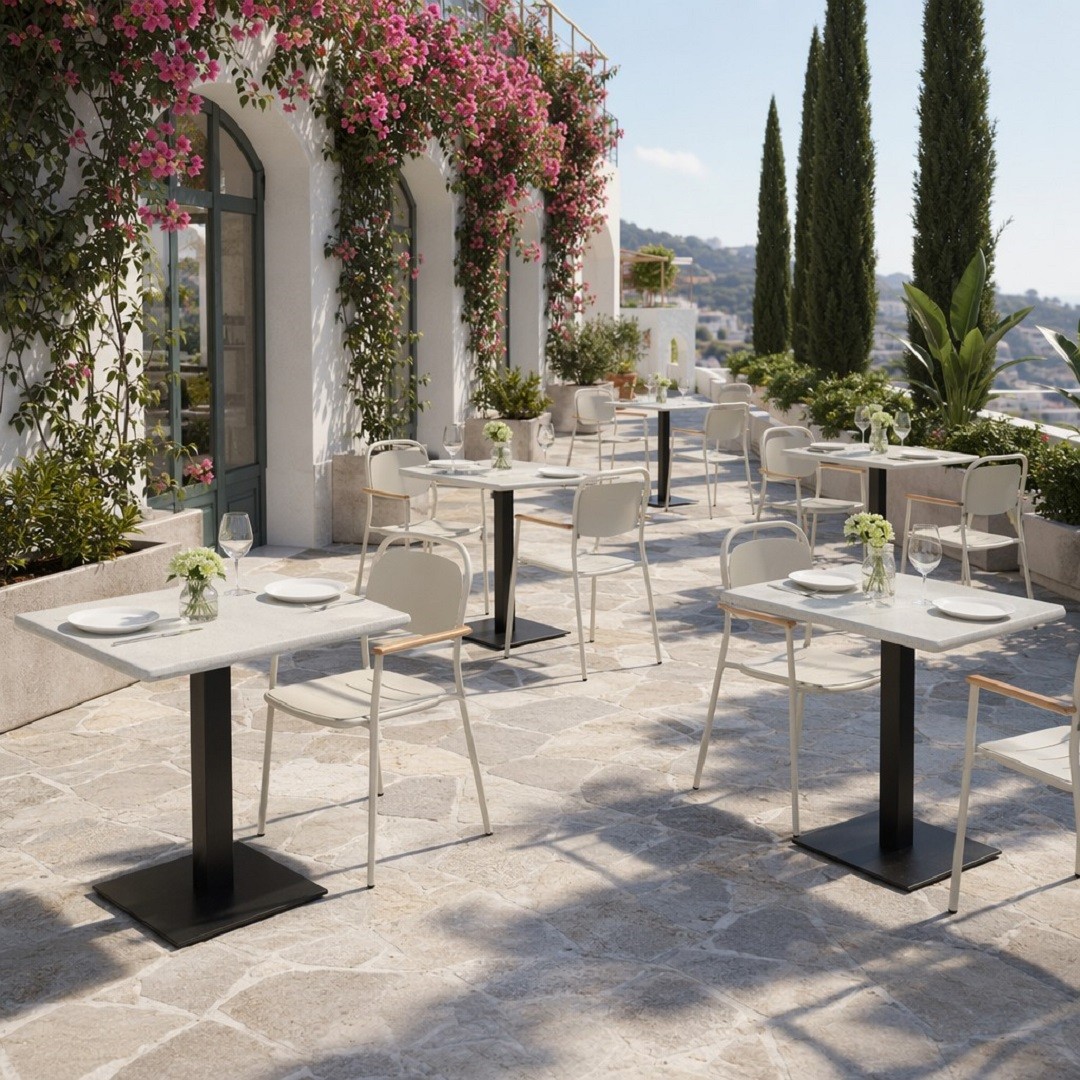
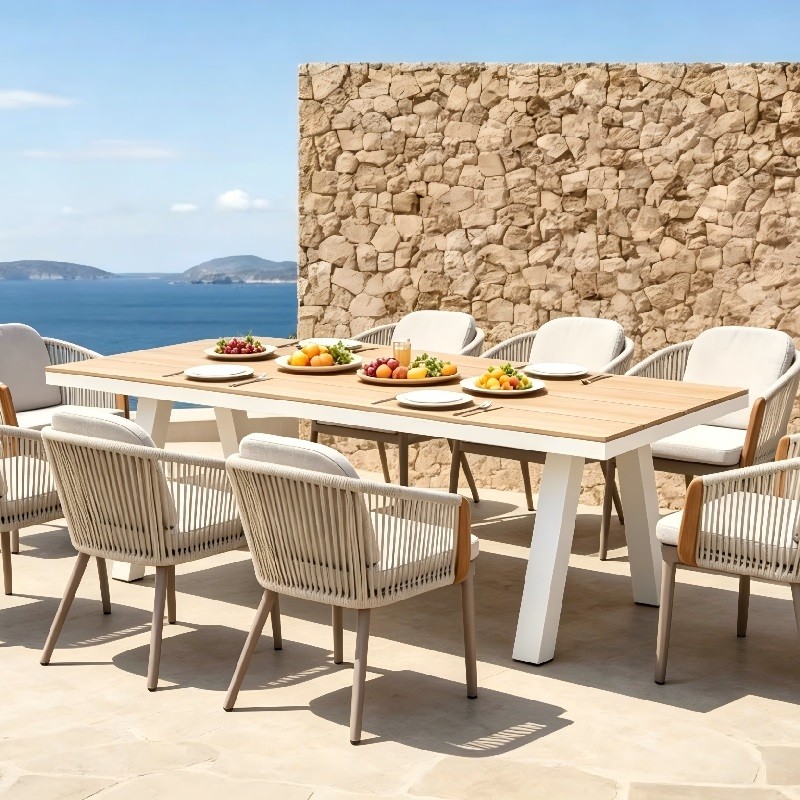
An exposed coastal terrace is the harshest zone in any outdoor specification: 1,000 hours of salt spray, 80 µm of coating and A4 fasteners are the working floor.
Direct Answer: Finish quality is microns and hours, not the words powder coated. Specify 60 µm dry film thickness inland and 80 µm coastal over multi-stage pretreatment, with ASTM B117 or ISO 9227 evidence at 500 and 1,000 hours respectively. Then specify colour fastness separately on the ISO 105-B02 Blue Wool scale — 6+ for HDPE weave and 7+ for powder-coated metal. Salt-spray hours are a quality checkpoint, not a lifespan prediction.
Finish And Climate: Microns, Hours And Colour Fastness
Most of the failures we are asked to diagnose come from one of three places: a frame that was never strong enough for the duty cycle, a finish that was never thick enough for the climate, or a weave and cushion package specified for appearance rather than for weather. Each has a number attached to it, and each number can be requested as documentation before a deposit is paid. Certification is the cheapest risk transfer available to a buyer, provided you ask for the report rather than the logo.
Powder Coat Dry Film Thickness And Salt-Spray Evidence
Thermoset polyester powder applied over multi-stage pretreatment and cured at 180–200°C produces a flexible, non-porous barrier; the same words applied over a degreased-only surface will chip and creep within a season. Specify dry film thickness, not just colour: 60 µm minimum for standard commercial outdoor use, 80 µm for coastal and high-humidity sites, and 100–150 µm for heavy-duty exposed positions such as seafront boardwalks. Then specify the corrosion evidence: ASTM B117 or ISO 9227 salt spray, 500 hours minimum inland and 1,000 hours coastal. For architectural-grade assurance, ask whether the coating system is tested to AAMA 2604 (five-year durability) or AAMA 2605 (ten-year Florida exposure).
A 500-hour pass does not mean five years of service. Coastal buyers should treat 1,000 hours as the floor rather than the target and budget for a monthly fresh-water rinse within 1,000 metres of the shoreline. Colour stability is a separate test entirely, measured by xenon-arc exposure to ISO 105-B02 and rated on the Blue Wool scale, where 7 or above is the working benchmark for powder-coated metal.
Weave, Cushions And Fastener Grade
A frame that passes 1,000 hours of salt spray can still lose a project to a rope that fades in fourteen months. Specify HDPE weave with UV stabilisers and a strand density around 1.4 g/cm³ or above, not standard PE, and require Blue Wool 6+ on the ISO 105-B02 scale. For cushions, solution-dyed acrylic or PVC with a quick-dry foam core and removable, washable covers is the commercial answer; a residential foam block holds water, breeds mildew and collapses under daily use. Every fastener that touches salt air should be A4 (316) marine-grade stainless, not A2 (304), which pits within 18–24 months at the coast.
Standard or document
What it proves
Ask for
EN 581-1
General safety requirements for outdoor furniture
Declaration of conformity
EN 581-2
Strength, durability and stability of outdoor seating
Full test report from an accredited lab
EN 581-3
Strength and stability of outdoor tables
Full test report, per table model
EN 15372
Non-domestic tables: strength, durability, safety
Report where the tender requires it
ASTM B117 / ISO 9227
Salt-spray corrosion resistance of the coating system
Hour rating on the exact colour and gloss specified
ISO 105-B02
Colour fastness to light, Blue Wool 1–8
Rating 6+ for HDPE weave, 7+ for metal
AAMA 2604 / 2605
Architectural coating durability, 5 / 10 year exposure
Coating system certificate
ISO 9001, BSCI, FSC, Intertek, SGS
Quality management, social compliance, timber traceability, inspection
Current certificates with scope and audit reports
Table 2. The documentation set behind a contract-grade patio specification. Our certificate page lists the current documents.
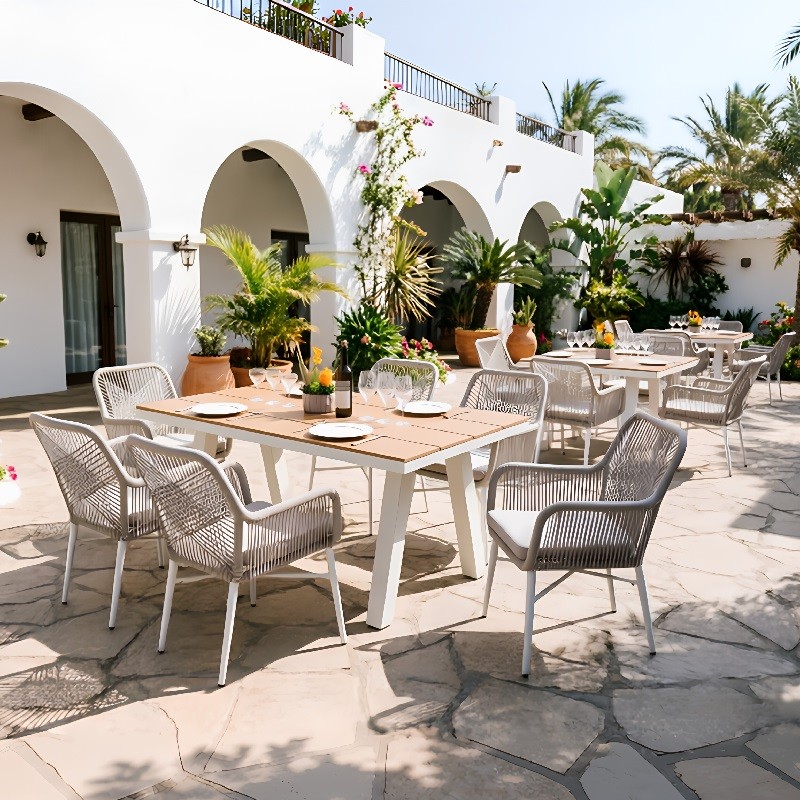
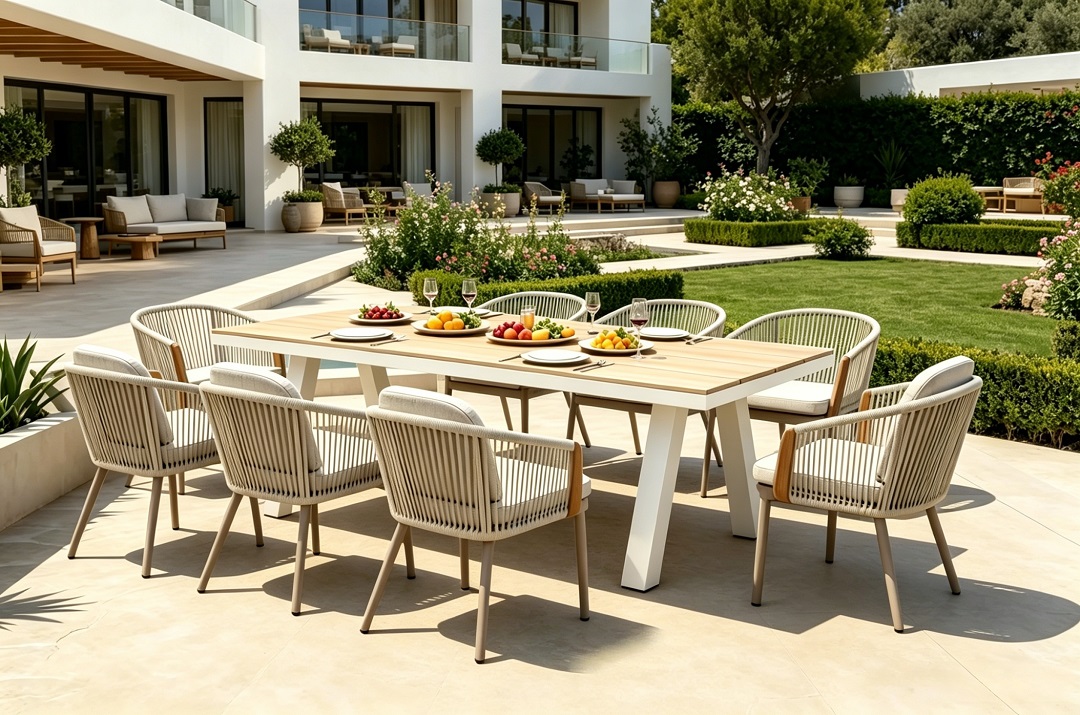
Table tops, frames and woven seating should be specified as one system; a top that swells or delaminates writes off an otherwise serviceable base.
Direct Answer: At container quantities, freight per seat, carton volume, stackability and the cost of one failed SKU in a mixed load matter more than the unit price. Build the carton plan before the price comparison, fix a 2–3% spares kit at order stage, and read the warranty exclusions before the warranty duration. The eight checks below are the order in which we review a wholesale enquiry, because a failure at point three makes points four to eight irrelevant.
From Specification To Container: MOQ, Warranty And Spares
Wholesale commercial patio furniture is normally quoted with a per-SKU minimum of 50–100 pieces, waived or reduced when a mixed container is built across categories. That flexibility is worth more than a discount, because it lets a distributor test rope chairs, aluminium bistro chairs and table bases in one load instead of committing a full container to a single bet. A 40-foot high-cube holds roughly 68–76 m³ of usable volume; stackable chairs at 30–40 pieces per stack fill it far faster than tables, so the carton plan — not the unit count — is what determines freight per seat.
Build The Load Plan Before The Price Comparison
Knock-down and nesting designs exist specifically to reduce carton volume, and the saving should be visible in your landed cost rather than absorbed silently by the supplier. Wholesale terms worth confirming in writing include MOQ applicability per colour, per model or per order; carton dimensions and stack height per model; a production slot confirmed against your opening date rather than a duration; and who carries duty, clearance and last-mile under FOB, CIF or DDP. The shipping container load calculator is a useful starting point.
Read The Exclusions Before The Duration
A three-year structural warranty and a three-year everything warranty are different products. Finish fading, UV colour shift, mildew on cushions, damage from stacking and cleaning with abrasives are almost always excluded, and those exclusions are exactly what a coastal resort will claim against in year two. Read the exclusion clause before the duration, and ask how a claim is processed: photographs and batch numbers, a replacement part shipped with the next container, or a site visit. Feet, glides, bolts and a colour-matched RAL touch-up pen cost almost nothing at order stage and are close to unobtainable two years later — which is how a single worn component retires a chair that still has eight years of structure in it.
#
Checkpoint
Pass condition
Consequence if missed
1
Material grade
6061-T6 / 6063-T5, 1.8 mm tube, TIG welds
Frame fatigue, racking and weld cracks in year two
2
Coating system
60 µm inland / 80 µm coastal DFT
Chipping at contact points, filiform corrosion
3
Corrosion and UV evidence
500 h / 1,000 h salt spray; Blue Wool 6+ weave, 7+ metal
Colour shift and pitting inside the warranty period
4
Structural testing
EN 581-2 and EN 581-3 reports per model
No defensible position if a guest is injured
5
Load and stability
Rated static load per seat, non-slip feet
Claims, replacements and reputational cost
6
Warranty terms
3–5 years structural, exclusions written out
Disputes settled on interpretation rather than fact
7
Lead time and capacity
Production slot confirmed against the opening date
A late opening with staff and no seating
8
After-sales package
Spare parts list, 2–3% spares, RAL touch-up pens
One worn foot pad writes off a serviceable chair
Table 3. The eight-point pre-order checklist. Thresholds are contract-trade minimums; specify stricter values for marine sites.
Commercial term
Working range in the contract trade
What to confirm
MOQ per SKU
50–100 pcs, negotiable on mixed containers
Whether MOQ applies per colour, per model or per order
Container load
40HQ ≈ 68–76 m³ usable; 20GP ≈ 28–33 m³
Carton dimensions and stack height per model
Production lead time
30–45 days after deposit and artwork approval
Slot confirmation, not just a duration
Payment structure
30% deposit / 70% before shipment, or L/C at sight
Inspection and release conditions
Incoterm
FOB, CIF or DDP depending on destination
Who carries duty, clearance and last-mile
Structural warranty
3–5 years; finish and UV typically excluded
Exclusions, claim process and spares supply
Table 4. Typical commercial terms for bulk patio furniture orders. These are industry working ranges, not quotations.
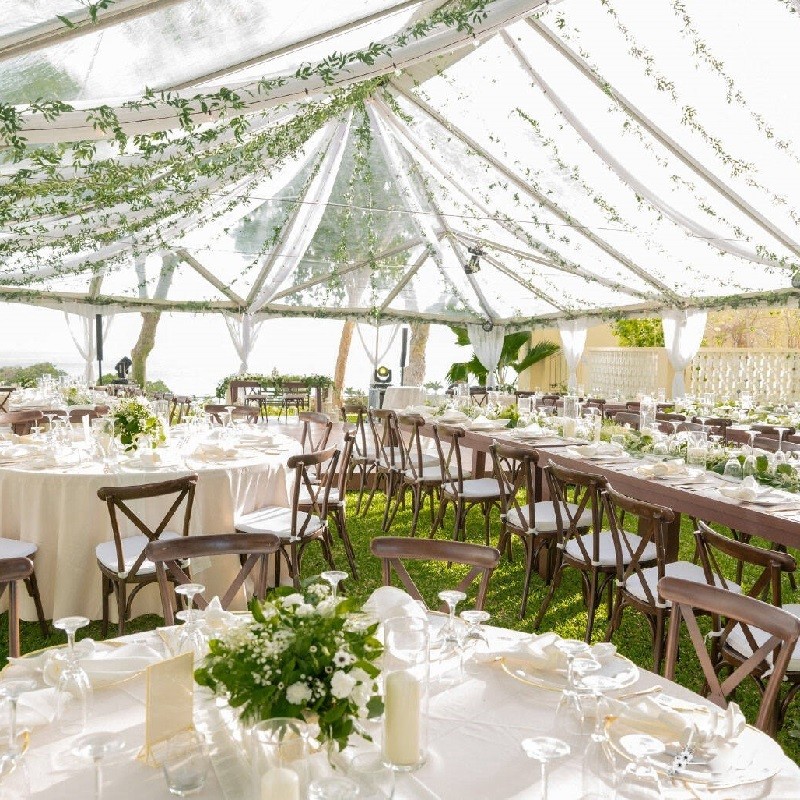
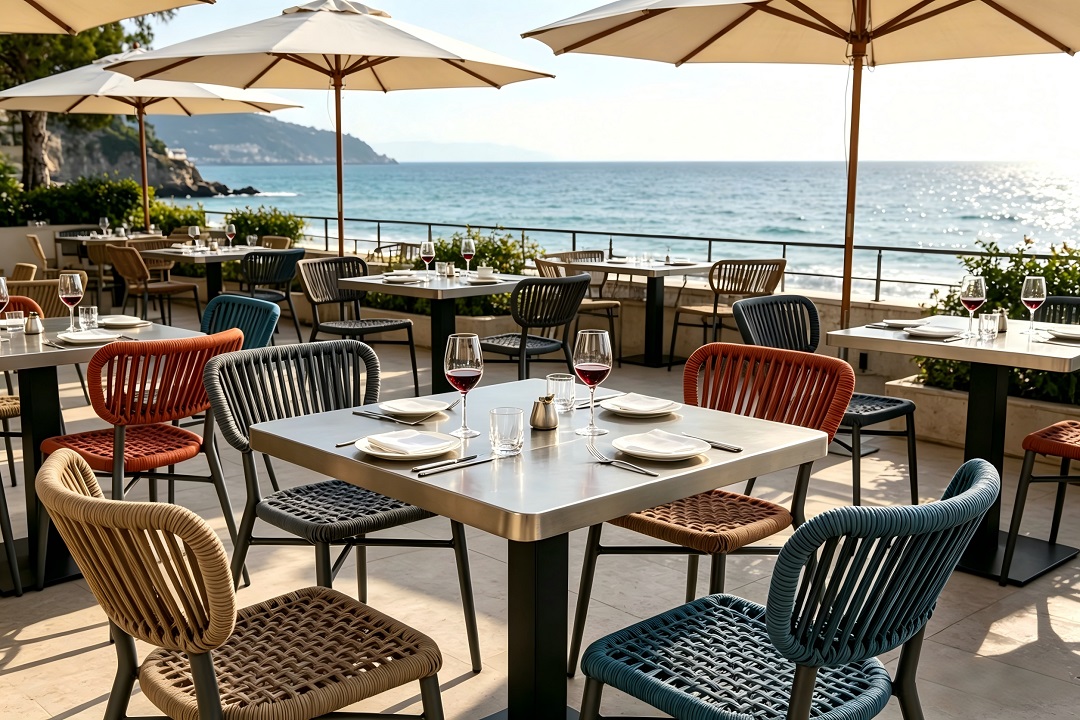
Repeated seating, daily cleaning and high turnover are exactly the conditions the EN 581 test series is written around.
Let's Build Your 2026 Patio Programme
If you are specifying commercial patio furniture for a 2026 opening, refurbishment or wholesale range, the fastest way to a usable number is to send the operating brief rather than a product code: venue type and market, target quantity per category, climate and coastal exposure, finish direction, and the standard your client or insurer requires. We will come back with a specification annex, the test documentation for each proposed model, a carton and container plan, and a quotation built on those terms — so that what you compare against other suppliers is the same eight points, line for line.
Answer-First Reference: The Numbers Behind The Checklist
Commercial patio furniture is contract-grade outdoor seating and tables specified for a measured duty cycle, a documented climate exposure and a repeatable after-sales programme. The figures below are working ranges used in pre-order reviews, not building-code substitutes or a quotation: confirm every threshold against the project brief, the test report for the exact model and colour, and the purchase order before a deposit is paid.
What Are The Working Specifications For Commercial Patio Furniture?
Table 5. Working specifications and verification method for each metric.
How Do You Turn The Checklist Into A Purchase Order?
Write the operating brief, not the product list. Record venue type, seats, expected turns per day, cleaning regime, climate and coastal distance for each zone. Those five inputs decide which thresholds in Table 5 apply.
Convert the brief into a specification annex. Alloy, wall thickness, coating microns, salt-spray hours, fabric standard, hardware grade and the test reports required. This annex, not the catalogue page, becomes the contract.
Verify on samples and documents together. Approve the finish against a physical sample and the coating against a gauge reading. A photo cannot show 60 µm.
Build the load plan and the after-sales package. Fix the carton plan, spares kit and touch-up colour at order stage, and confirm the production slot against your opening date rather than a lead-time claim.
Three Follow-Up Questions Wholesale Buyers Often Ask
Is 500-hour salt spray enough for a beachfront resort?
No, and the gap is not marginal. 500 hours is an inland commercial benchmark; within roughly 1,000 metres of salt water the specification should be 1,000 hours minimum, with A4 (316) fasteners throughout and a monthly fresh-water rinse written into the maintenance schedule. If a quotation for a coastal project cites 500 hours without qualification, it is an inland specification being sold into a marine environment.
Can one patio set serve both a hotel terrace and a street café?
It can, if the brief is set by the harsher of the two. A hotel terrace usually needs deeper lounge seating and a finish that photographs well; a busy café needs stackability, wipe-clean surfaces and a frame that tolerates being moved twice a day. Specify stackable aluminium dining chairs at 1.8 mm wall with a 60–80 µm coat and both venues are covered, but accept that a single deep lounge chair will not survive café handling and a single stacking chair will not read as premium on a terrace.
How do we compare a factory quotation with a trading company quotation?
Compare the annex, not the price. Ask both for alloy and wall thickness, coating microns, salt-spray hours on the specific colour, test reports per model, the carton plan, the warranty exclusions and the spares list. A trader can match a price precisely because the underlying specification is lighter, and the difference only appears in year two. A factory visit or a third-party inspection closes the remaining gap between the document and the production line.
Key Takeaways Worth Quoting
Commercial grade is a duty-cycle decision expressed in four numbers: alloy, wall thickness, coating microns and salt-spray hours.
Salt-spray hours are a quality checkpoint, not a lifespan guarantee; 1,000 hours is the coastal floor.
EN 581-2 and EN 581-3 govern outdoor seating and tables; EN 16139 expressly excludes outdoor seating.
Freight per seat, not unit price, decides the landed cost of a mixed container.
Read warranty exclusions before warranty duration, and fix the spares kit at order stage.
Eight mistakes account for most failed patio orders, and every one of them can be closed with one document request.
We are a manufacturer of high-quality indoor and outdoor restaurant furniture, committed to providing excellent products and services. We offer one-stop solutions for restaurant furniture wholesale and customization. Please send an inquiry to get detailed product information, prices, and delivery schedules provided by our professional team. Contact us anytime for further assistance. Let's establish a long-term partnership and grow together.
*Email
*Phone
*Title
*Content
Upload
Only supports .rar/.zip/.jpg/.png/.gif/.doc/.xls/.pdf, maximum 20MB.