









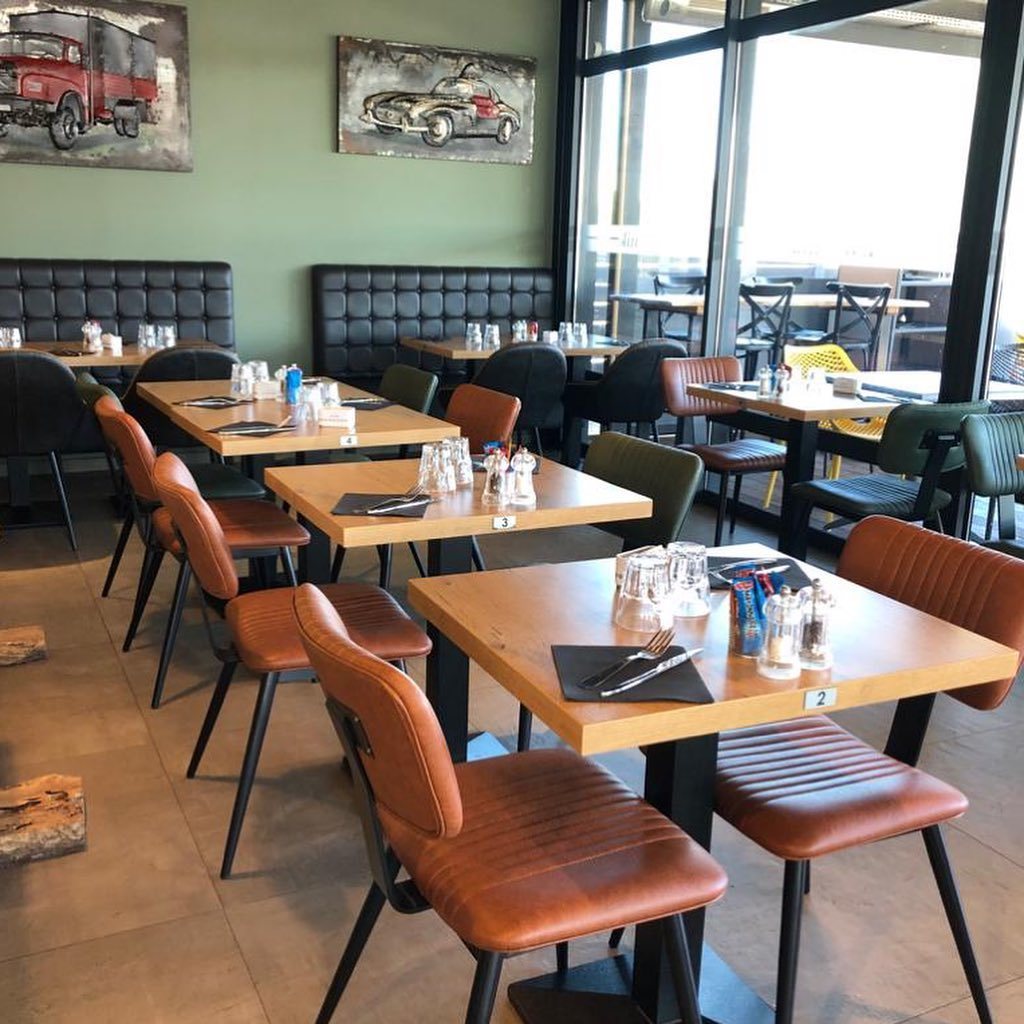





Fast Food Restaurant Chairs: Upholstery, Cleaning Chemicals And Foam Density
A fast food chair should use a closed-cell polyurethane or vinyl upholstery over 35–40 kg/m³ high-resilience foam, with welded or sewn-and-sealed seams rather than open seams. Closed surfaces survive the quaternary ammonium sanitisers used three to five times a day in a fast food unit; woven textiles absorb them, dry slowly and lose their backing within 12–18 months. The specification that matters is not the colour but the abrasion figure, the seam type and the chemical list the surface is tested against. For specification questions beyond the scope of this article, see the CDG FAQ library. The economics behind that recommendation are simple. A chair with 40 mm of high-resilience foam and a sealed vinyl cover typically costs 15–25% more than a chair with a fabric cover over 25 kg/m³ foam, and lasts two to three times as long in a fast food environment. Across a 100-seat estate with 4% annual replacement, that difference is several full chair sets over an eight-year horizon. When we are asked to diagnose a chair failure in a fast food unit, the frame is usually intact. What has failed is the seat surface: foam collapsed under the ischial bones, cover cracked along the front edge, seam opened and water got into the cushion, or the backing disintegrated after repeated sanitiser contact. All four failures are specification decisions taken months before the chair arrived. Table 1. Upholstery options for fast food chairs. Three checks worth taking from this guide A fast food chair is sat on for 12–18 minutes at a time, up to 20 times a day, and wiped between every sitting. That is not a resting load; it is a repeated compression cycle combined with a chemical cycle. The seat foam compresses under the ischial bones, recovers, compresses again, and the cover is wiped with a sanitiser that has to be effective against grease and food residue but not degrade the surface. The consequence is that the front edge of the seat is the first place to fail in almost every fast food chair we inspect. It carries the highest pressure when a diner slides in, it takes the most wiping, and it is the point where the cover is stretched over the foam edge. A chair with a waterfall front edge and a moulded foam core lasts measurably longer than the same chair with a square edge and a cut foam block. Direct Answer: For fast food, the specification priority is chemical resistance first, abrasion second, comfort third. Vinyl and polyurethane meet that order; woven textile does not. Choose a woven fabric only in a quiet zone with low dwell and no sanitiser contact, and expect to replace the covers rather than the chairs. Vinyl is the workhorse of fast food seating: it is closed, wipe-clean, and tolerant of the alcohol and quaternary ammonium products used in daily cleaning. Its weakness is heat and cold — it becomes stiff in low temperatures and sticky in high humidity — which is why PU has gained ground in tropical and coastal markets. PU is softer, breathes slightly better and still wipes clean, at a modest price premium and a slightly shorter life. Coated fabric sits between the two: it wipes clean but has a textile hand-feel and a lower abrasion figure. It suits brand-led interiors where the seating is expected to be replaced at the five-year refit anyway. Woven textile is the one to avoid in a fast food unit, not because it is cheap but because it cannot be cleaned with the products the store actually uses. Table 2. Abrasion and cleaning performance benchmarks. Foam density is the number buyers most often skip and the number that decides whether a chair still feels like a chair after a year. Below 30 kg/m³, foam collapses at the ischial bones within 12–18 months in daily fast food use. At 35–40 kg/m³ with a high-resilience formulation, the same seat shape holds for four to six years. Above 45 kg/m³, the seat becomes too firm for a 20-minute dwell and the extra money is spent on durability nobody perceives. Seat structure matters as much as the foam. A plywood or moulded plastic seat pan under the foam distributes load and prevents the foam from shearing at the front edge. A foam block sitting directly on a steel frame has no such support, and that is the design that produces the characteristic sag at the seat front after 18 months. Ask for the pan material, its thickness and whether it is fixed to the frame or removable for replacement. Seams are where water gets in. A sewn seam with an open stitch line acts as a wick: sanitiser and cleaning water travel along it into the foam, and the cushion fails from the inside. The three acceptable constructions are welded seams, sewn-and-sealed seams with a protective tape, and moulded covers with no seam at the seating surface at all. Check the seam at the seat front and the seat-to-back junction, which are the two places a fast food chair is most likely to be wiped aggressively. A quick field test is to pour 50 ml of water along the seam and press it; if the surface under the seam is damp after two minutes, the construction will fail in service. Ask for the cleaning products the store uses, then ask the supplier to confirm compatibility in writing. The three chemical families that cause most upholstery damage in fast food units are quaternary ammonium sanitisers at high concentration, chlorine-based products used on floors and mopping cloths, and alcohol-based wipes used on counters. Each affects a different material: quaternary ammonium attacks plasticiser in low-grade vinyl, chlorine discolours pigment, and alcohol dries PU. A practical routine is better than any lab test: clean with the specified dilution, wipe with a damp cloth to remove residue, and dry the surface rather than leaving it wet. Chairs that fail early in fast food units are usually not failing because of the chemical but because the chemical was left on the surface overnight in a closed, warm room. Eight fields carry the specification: cover material and grade, cover thickness in microns or millimetres, foam density, foam type, seat pan material and thickness, seam construction, abrasion figure to EN ISO 12947, and the chemical list the cover is compatible with. Two more closes the commercial side: cover replaceability and the price of a replacement cover set. Cover replaceability is the line that changes lifetime cost. A chair with a removable cover can be re-covered for a fraction of the chair price when the surface finally fails; a chair with a glued cover must be replaced whole. In a fast food estate with 4–8% annual replacement, that difference compounds quickly. For matching specifications, lead times and warranty terms, see the care and maintenance guide, restaurant furniture customization and restaurant furniture FAQ pages; each is specified against the same duty cycles and test standards used above. Send the cleaning chemicals used in your units and the seat count per site. We will return a chair specification with cover grade, foam density, seam construction and abrasion evidence, plus a comparison of three options at different price points so the trade-off between purchase price and replacement rate is visible rather than assumed. Material swatches and spot-test results can be shipped with the sample. Contact: lisaliang@cdgfurn.com | +86 139 2610 3331 (WhatsApp / WeChat) | Export office +86 20 3693 3270 | Inquiry form and contact page on cdgfurn.com. Continue with the inquiry form, the contact page, the restaurant furniture catalog and the CDG Blog. fast food restaurant chairs is specified against measured duty cycles, documented material performance and a repeatable after-sales programme. The figures in this guide are working ranges used in pre-order reviews; confirm every threshold against the project brief and the purchase order before a deposit is paid. Three to six years for vinyl or PU over 35–40 kg/m³ foam, and 12–24 months for woven textile in the same duty cycle. The variance is not about quality tiers within one material but about material class, foam density and seam construction. A cheap vinyl with a sealed seam will outlast an expensive fabric with an open seam in a fast food unit every time. Yes, when the cover is removable and the frame is intact. A replacement cover set typically costs 20–30% of a new chair, so a 100-seat unit facing 8% annual cover failure can save the price of several chairs per year by specifying removable covers at the outset. Confirm that replacement covers will still be available five years after the order, and get that in writing. It is suitable for counter, window and food court zones where dwell is short and cleaning is frequent, because there is no cover to fail. It is less suitable for family and booth zones where a 30–40 minute stay is expected, because the surface has no compliance. Use it where turnover is the priority and specify foam-based seating where dwell comfort drives satisfaction scores.Quick Answer: What Upholstery Should a Fast Food Chair Use?
The failure is almost never the frame
Upholstery
Cleaning tolerance
Abrasion
Dwell comfort
Typical service life
Vinyl (PVC)
Excellent — wipe-clean, sanitiser-safe
High
Firm, warm in hot climates
4–6 years
Polyurethane (PU)
Very good — wipe-clean, softer hand
High
Good
3–5 years
Coated fabric
Good — wipe-clean, breathable
Medium-high
Good
3–4 years
Woven textile
Poor — absorbs liquids, needs extraction
Medium
Best initial feel
12–24 months
Moulded polypropylene, no upholstery
Excellent — no cover to fail
Very high
Firm, short dwell only
6–10 years
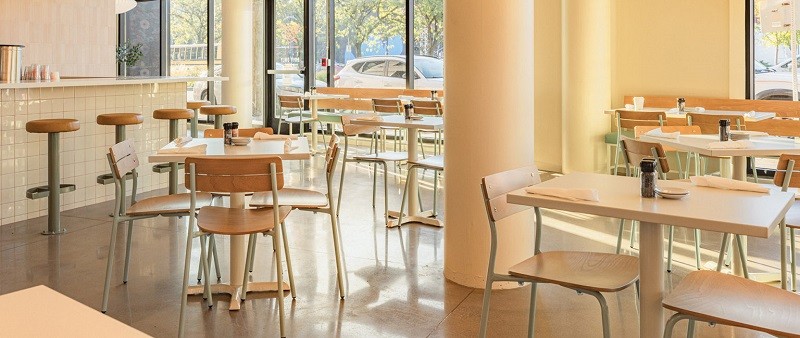
Why Fast Food Chairs Fail at the Upholstery, Not the Frame
Upholstery Options Compared for Fast Food Use
Vinyl, polyurethane, coated fabric and woven textile
Test or property
Method
Working threshold
Why it matters
Abrasion resistance
EN ISO 12947 (Martindale)
30,000 cycles minimum for daily-use seating
Predicts cover wear at the seat front edge
Coating adhesion
EN ISO 2409 cross-cut
Class 0–1
Detects cover that will peel at seams
Flex resistance
EN ISO 7854
No cracking at 10,000 flex cycles
Front-edge failure test
Chemical resistance
Manufacturer chemical list plus spot test
No colour shift after 48 h contact
Matches sanitiser actually used in store
Foam compression set
ISO 1856
≤ 10% at 50% compression
Predicts foam collapse after 12 months
Foam density
Measured mass per volume
35–40 kg/m³
The single best predictor of seat life
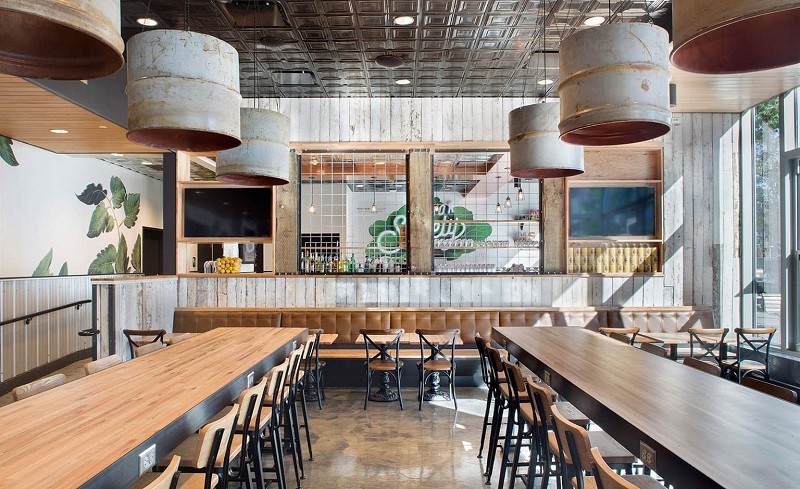
Foam Density and Seat Structure
Seam Construction and Moisture Ingress
Cleaning Chemical Compatibility Testing
A Specification Template for Fast Food Chairs
Let's Specify Your Chairs Properly
Answer-First Reference: Upholstery and Durability
How long should fast food chair upholstery last?
Can fast food chairs be re-covered instead of replaced?
Is moulded plastic seating suitable for fast food?
Key Takeaways Worth Quoting