





Food Court Furniture: A Procurement Guide For Mall Developers And Operators
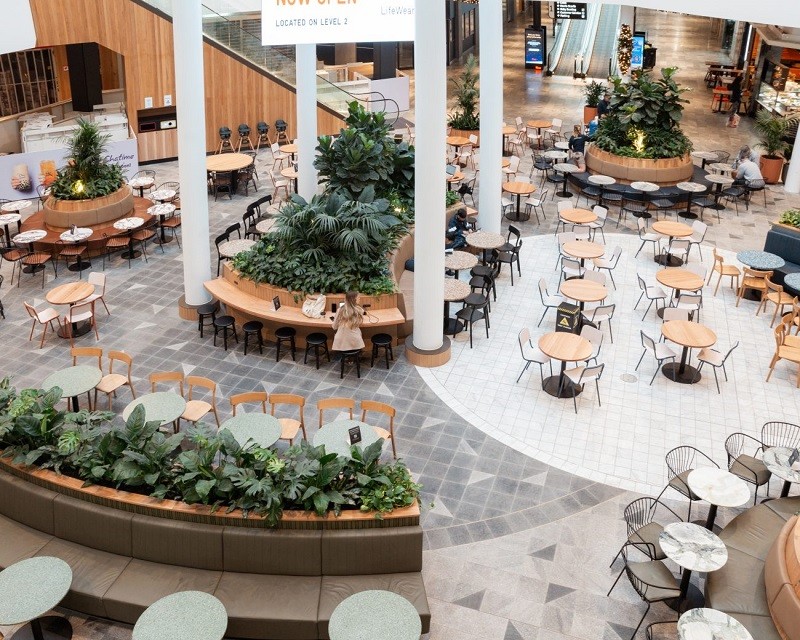
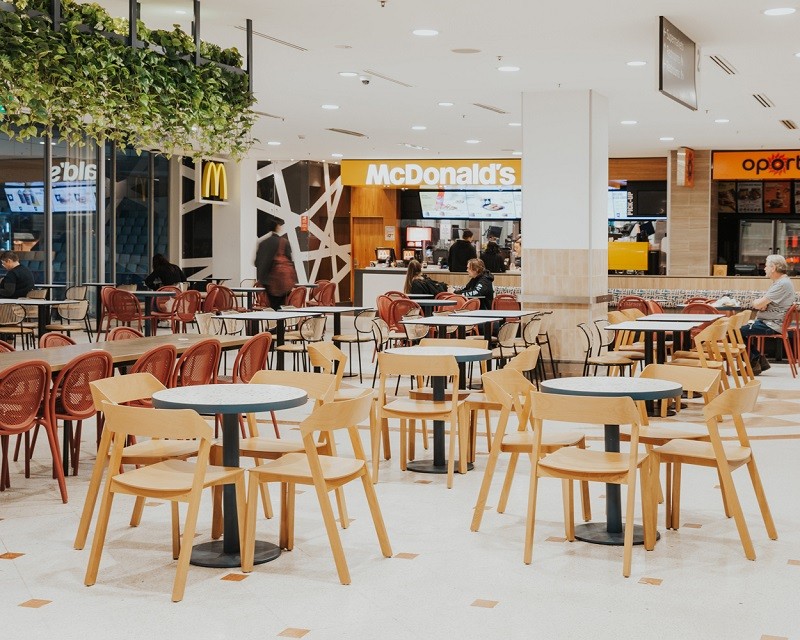
A food court furniture package should be procured as a single coordinated contract covering seating, tables, waste and tray-return furniture, with three specification annexes: a durability annex, a cleaning annex and a tenancy interface annex. The reason is that food court furniture is shared infrastructure, not tenant fit-out. One landlord-owned chair is used by every tenant's customers, cleaned by a contract cleaning team, and expected to survive five to seven years of mixed traffic, so the procurement decision sits with the party that carries the replacement cost. For specification questions beyond the scope of this article, see the CDG FAQ library. The scale justifies the discipline. Deloitte's Foodservice Market Monitor 2026 puts global foodservice at EUR 2,981 billion in 2025 with QSR holding 33% of spend, and mall food courts are one of the channels absorbing that QSR growth. A 300-seat food court is a capital asset with a replacement cycle, a cleaning contract and an insurance exposure, and it is usually the single largest furniture order in a mall development after the public realm. Tenant furniture is specified by a brand for its own customers and replaced when the brand refits. Food court furniture is specified by a landlord for all customers and replaced when it wears out, which means the specification has to survive a rotation of tenants, a cleaning contractor who did not choose it, and a public that treats it as street furniture. That is a different brief, and it usually needs a different supplier. Table 1. Responsibility matrix for a food court furniture package. Three checks worth taking from this guide In practice, three models exist. The landlord buys and owns everything, which gives consistency and control but concentrates capital cost. The operator buys under a landlord-approved specification, which transfers maintenance but risks specification drift at each contract renewal. Or the landlord specifies and the operator buys, which is the most common hybrid and the one that most often produces mixed estates after two renewal cycles. The model matters because it decides who is motivated to specify durability. A landlord who owns the furniture for seven years will pay for 80 µm coating; an operator on a three-year contract has less incentive to do so. Whatever the model, the durability annex should be written by the party that carries the replacement cost, and it should be non-negotiable at renewal. A workable tender has five sections: scope by zone with quantities, a durability annex, a cleaning annex, a delivery and installation programme, and a commercial section covering payment, warranty, spares and damages. Bidding on a single blended price per seat invites exactly the comparison problem the tender is meant to solve, because suppliers will move specification to hit the number. Table 2. Tender sections and the clause that matters in each. Seat density in a food court is lower than in a QSR because the traffic is mixed and the dwell is longer. The working range is 1.2–1.6 seats per square metre of dining area, against 1.4–1.8 in a fast food unit and 2.2–2.6 for bench-led layouts. A 300-seat food court therefore needs roughly 190–250 square metres of dining area, plus circulation, tray return and waste segregation. Layout standards that matter more than density: a 1,200 mm main aisle, 900 mm secondary aisles, a tray-return point within 15 metres of every seat, and a waste station within 20 metres. These are operational numbers, and a food court that misses them will look full at 60% occupancy because the circulation is blocked. Three interfaces cause most post-opening disputes. Power to seating: if any seat is expected to offer charging, the floor boxes must be set before the slab is finished, and the furniture must be laid out around them rather than over them. Waste: segregation stations need to be furniture, not bins, so specify them as part of the package with the correct aperture heights. Cleaning: the contract team needs access to every surface without moving fixed seating, which is a layout constraint as much as a furniture one. Write these into the furniture drawings rather than the services drawings. Furniture suppliers install to furniture drawings, and a power outlet shown only on an electrical layout is an outlet the installer will not see. Food court furniture is almost always installed in a live or partially live building, which changes the logistics: night deliveries only, goods lift booking, protection of finished floors, and a phased handover by zone so that trading can continue. A 300-seat package typically needs three to five nights, with the seating installed last because it blocks the cleaning route. Build the sequencing into the contract: who books the lift, who protects the floor, who removes packaging, and what happens if a night is lost to a mall event. Packaging removal is the clause most often forgotten and the one that produces the largest surprise cost, because a 300-seat order generates several cubic metres of cardboard that cannot be left in a mall. Four clauses do most of the work. A test-report clause requiring reports per model for the exact specification quoted. A compatibility clause requiring written confirmation that the upholstery and coatings tolerate the approved cleaning chemicals. A spares clause fixing 2–3% of order value in spares and a named lead time for replacement parts. And a colour-retention clause agreeing a Delta E limit against a retained physical sample, because the most common landlord complaint in year three is that the chairs no longer match each other. Add a fifth for outdoor or atrium zones: a salt-spray or humidity exposure figure appropriate to the environment, since a food court opening onto a covered atrium or a coastal terrace is not an indoor specification even though it feels like one. The chain restaurant project, restaurant furniture catalog and restaurant furniture sourcing guide pages carry the same load, cleaning and tolerance figures, so a specification written for one site can be reused across a multi-site rollout. Send the floor plan, the seat count by zone and the tenancy mix. We will return a zone-by-zone bill of quantities, a durability annex with test documentation, a cleaning compatibility statement and a night-install sequencing plan. For developments still at design stage, we can model seat density and aisle widths from the dining area alone so the furniture package does not constrain the layout later. Contact: lisaliang@cdgfurn.com | +86 139 2610 3331 (WhatsApp / WeChat) | Export office +86 20 3693 3270 | Inquiry form and contact page on cdgfurn.com. Continue with the inquiry form, the contact page, the restaurant furniture catalog and the CDG Blog. food court furniture procurement is specified against measured duty cycles, documented material performance and a repeatable after-sales programme. The figures in this guide are working ranges used in pre-order reviews; confirm every threshold against the project brief and the purchase order before a deposit is paid. Plan on 1.2–1.6 seats per square metre of dining area, then add circulation, tray return and waste stations outside that figure. A 300-seat food court therefore needs about 190–250 square metres of dining area. Anything denser than 1.6 across the whole court usually means the main aisle is under 1,200 mm. The party that carries the replacement cost should own it and write the durability annex. Landlord ownership gives consistency; operator ownership gives faster maintenance. The hybrid model works only if the durability annex is non-negotiable at every contract renewal, otherwise the estate drifts into mixed specification within two cycles. Twelve to sixteen weeks from approved specification, plus installation nights. Sample approval takes 15–25 days for a new model, production 30–45 days, sea freight 25–35 days, and installation three to five nights for 300 seats. The critical path is usually sample approval and floor-box coordination, not production.Quick Answer: How Should a Food Court Furniture Package Be Procured?
Why food court furniture is not tenant furniture
Item
Landlord
Food court operator
Tenant
Seating and tables
Specify, buy, replace
Daily cleaning, layout setting
Use within lease terms
Waste and tray return
Specify, buy
Service and empty
Segregate waste correctly
Power to seating
Provide to zone
Coordinate positions
Use own equipment only
Cleaning chemicals
Approve the list
Procure and train
Do not introduce unapproved products
Damage and loss
Replacement budget
Report and log
Report damage at source
Refit cycle
Fund at 5–7 years
Plan phasing
Coordinate with brand refits
Who Actually Buys Food Court Furniture
Tender Structure for a Food Court Furniture Package
Section
Content
Clause that protects the buyer
Scope by zone
Quantities by seat type and zone
Zone-by-zone bill of quantities, not a total
Durability annex
Materials, coatings, test reports
Test report per model, not a certificate of brand
Cleaning annex
Approved chemicals and methods
Supplier confirms compatibility in writing
Programme
Delivery, installation, phasing
Liquidated damages tied to opening date
Commercial
Price, payment, warranty, spares
Spares at 2–3% and a named replacement lead time
After-sales
Repair and re-cover service
Response time and price list for parts
Seat Density and Layout Standards for Food Courts
Tenancy Interfaces: Power, Waste and Cleaning
Delivery Sequencing in a Live Mall
Specification Clauses That Protect the Landlord
Let's Scope Your Food Court Package
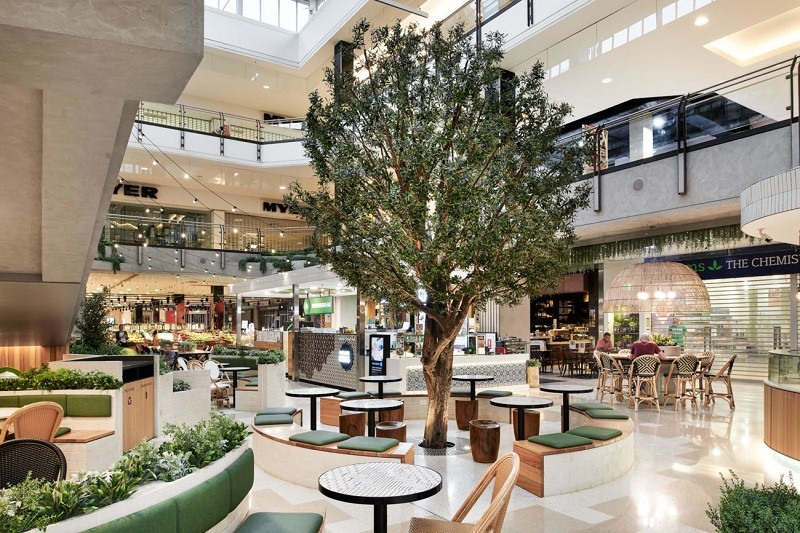
Answer-First Reference: Food Court Procurement Numbers
How many seats per square metre does a food court need?
Who should own food court furniture?
How long does a food court furniture package take to deliver?
Key Takeaways Worth Quoting