


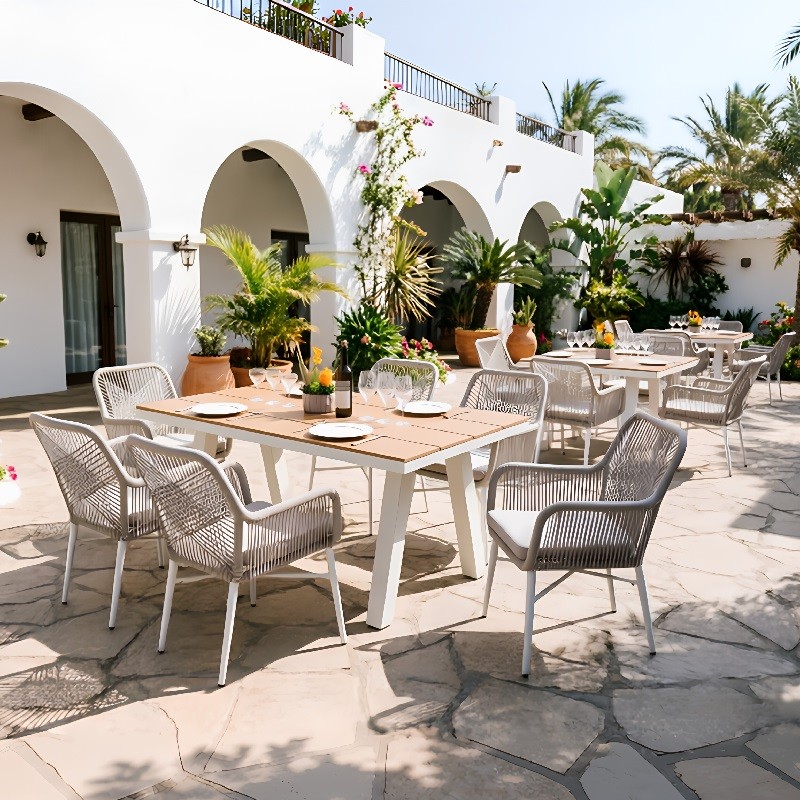

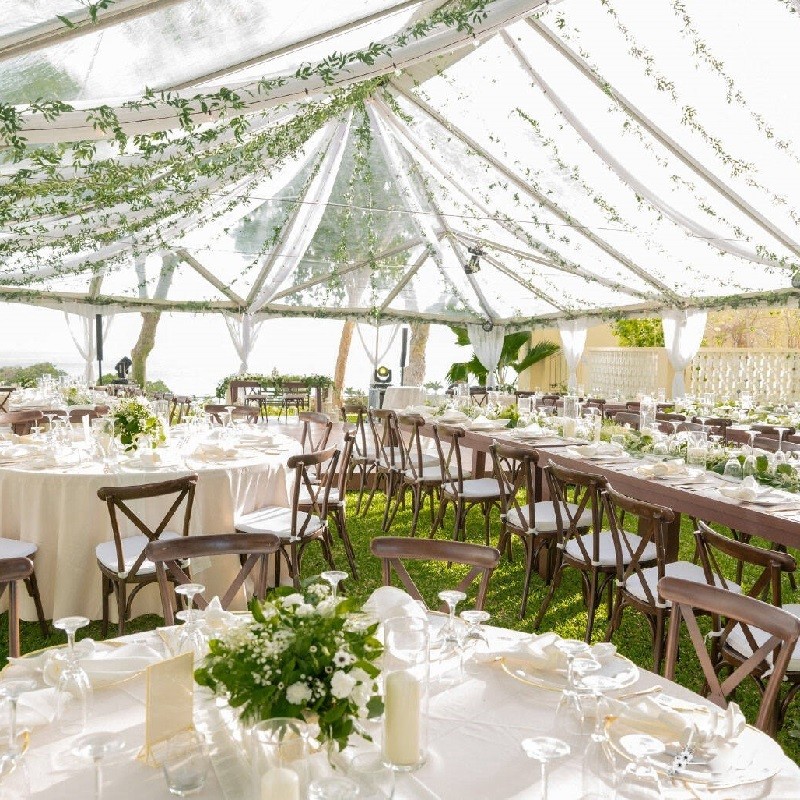
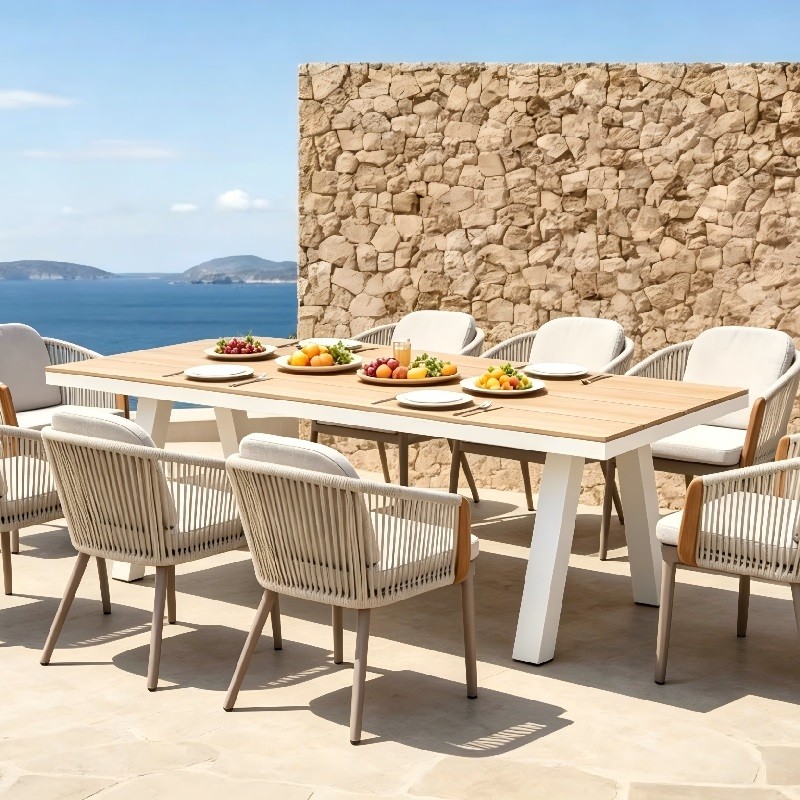
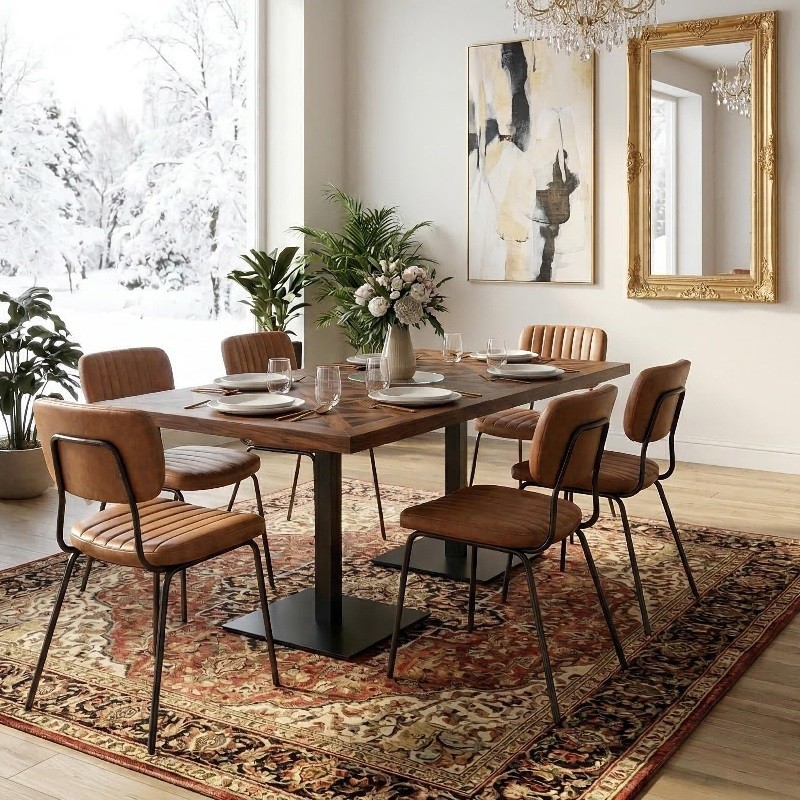




Restaurant Patio Furniture: 10 Ways To Design An Outdoor Dining Area Customers Love
A patio is not a seasonal add-on. It is the highest-leverage square footage most restaurants underuse.
Outdoor dining has moved from a pandemic-era necessity to a core profit center. Operators who treat the patio as a designed revenue space — not an afterthought with spare chairs — are seeing guest capacity rise by 25–50% in casual formats, with covered terraces contributing 15–35% increases in annual table turnover. Among full-service restaurants, 81% now have a patio, yet fewer than 20% run it as a deliberately designed profit center.
That gap is where restaurant patio furniture decisions separate operators who gain a competitive edge from those who replace warped chairs every eighteen months. This guide breaks down ten design moves that address what outdoor restaurant operators actually need: durability under commercial load, layouts that protect covers without suffocating service, and furniture that stays presentable through UV, rain, salt air, and nightly stack-and-store routines. Along the way, it reflects how a Restaurant Furniture Manufacturer with contract-grade production thinks about each decision — not as a catalogue purchase, but as an operational asset.
The Short Version
Draw the circulation paths before you place a single table. Usable covers beat maximum seat count on paper, every Friday night.
Choose materials by how they fail, not by a "weather-resistant" label. UV, water ingress, salt and thermal cycling are the four real loads.
Frames, tops, bases and storage belong to one specification. A coordinated Commercial Outdoor Solution outlives a pile of mismatched line items.
1. Design for Covers and Circulation Together
The most common patio failure is not ugly furniture. It is a layout that forces a choice between squeezing in another two-top and letting servers move without apologizing to guests.
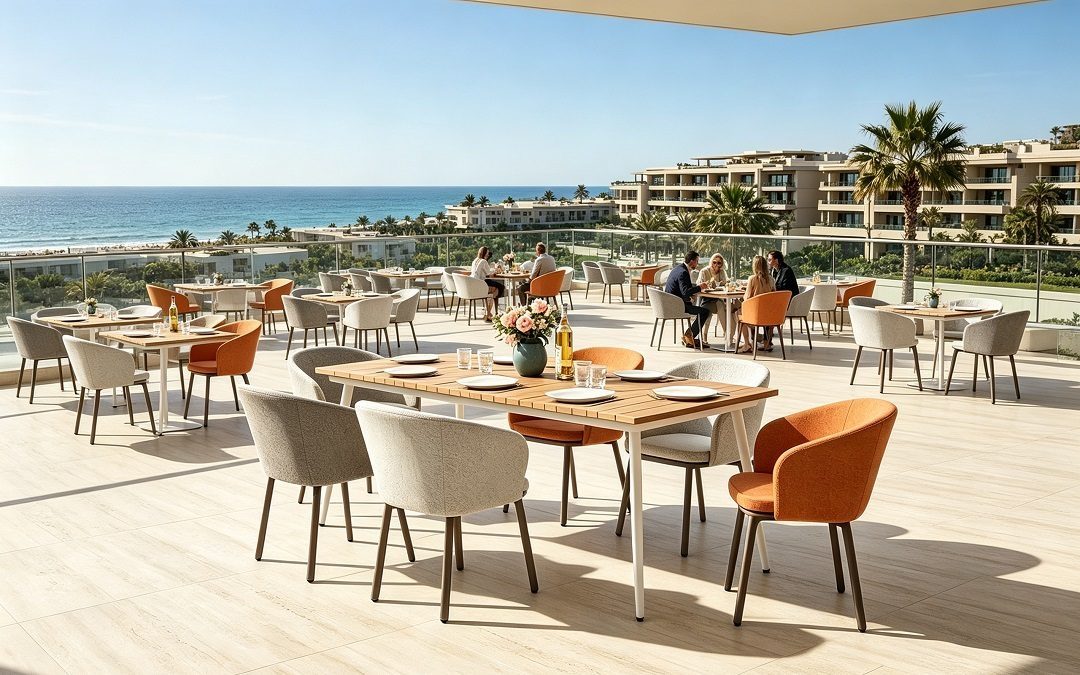
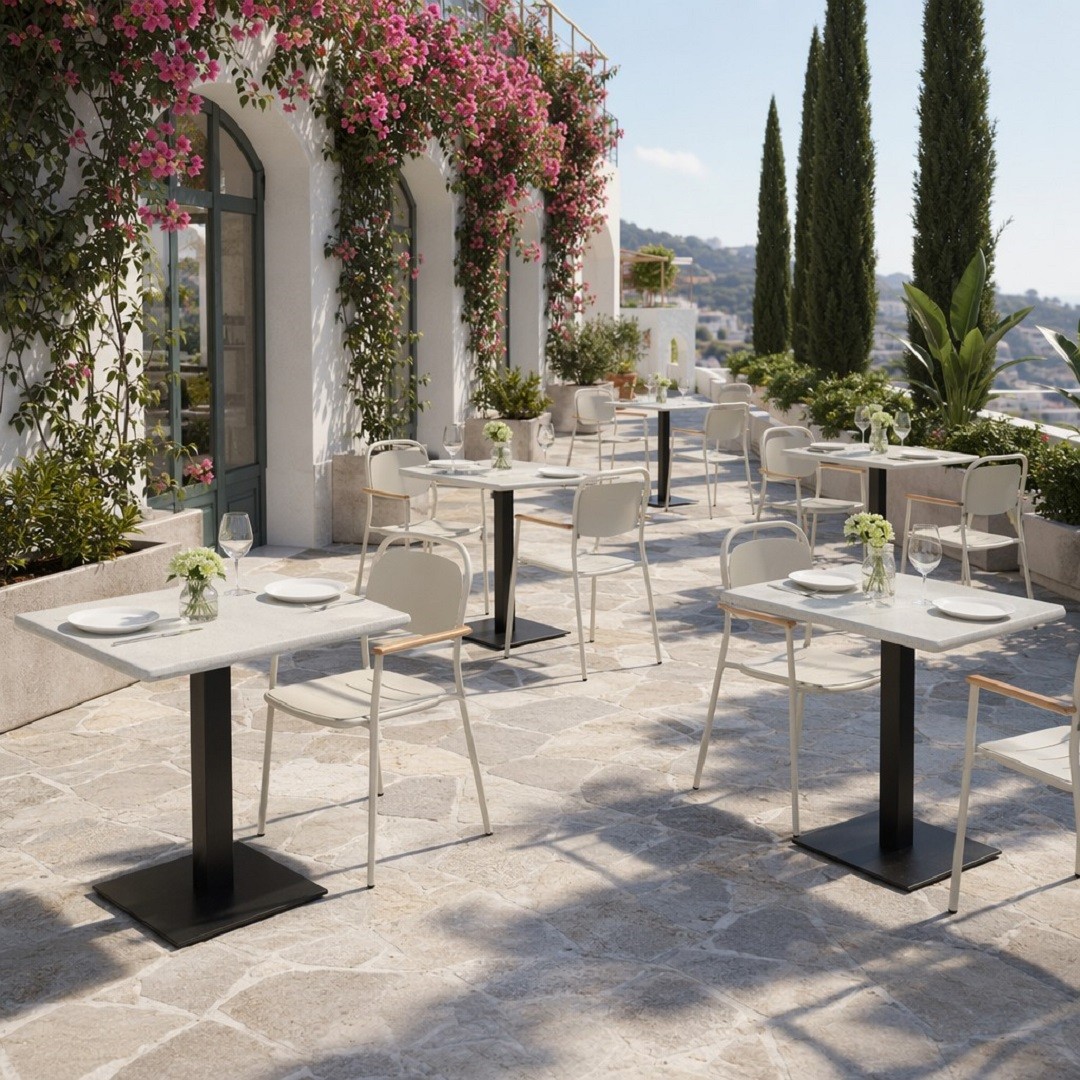
Commercial patio planning guidance converges on a workable rhythm: three to four feet between tables for general circulation, and at least five feet for main walkways. Behind each seated guest, plan 18–24 inches of push-back clearance; between the table edge and the back of an opposing chair, allow 24–30 inches for comfortable sitting and rising. A square four-top needs roughly a 6.5 × 6.5 ft working zone once chairs are pulled out.
The design principle is not to maximize seat count on paper. It is to maximize usable covers — tables that turn without collisions, servers who can carry a tray without side-stepping, and guests who do not feel packed into a corridor. Movable tables and chairs, rather than fixed banquettes wherever possible, let you reconfigure from two-tops to a six-top for a group without calling a contractor.
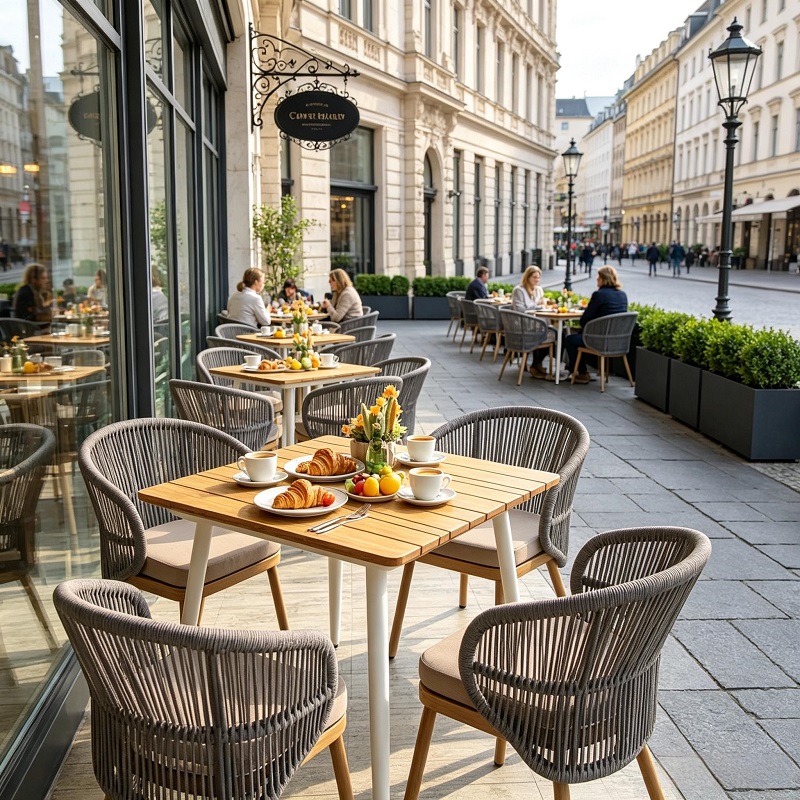
Restaurant patio seating choices should follow the layout logic, not fight it. Stackable, lightweight frames reduce nightly labor; pedestal table bases open foot clearance and simplify busing compared with four-leg designs that block chair pull-out.
Operator Takeaway: Draw the Paths First
Draw the circulation paths first, then place tables into the remaining zones. If a layout only works when guests tuck their chairs in perfectly, it does not work on a Friday night. Explore the Commercial Outdoor Solution for layout-compatible furniture families designed to work together across a full patio footprint.
2. Match the Seating Type to the Service Moment
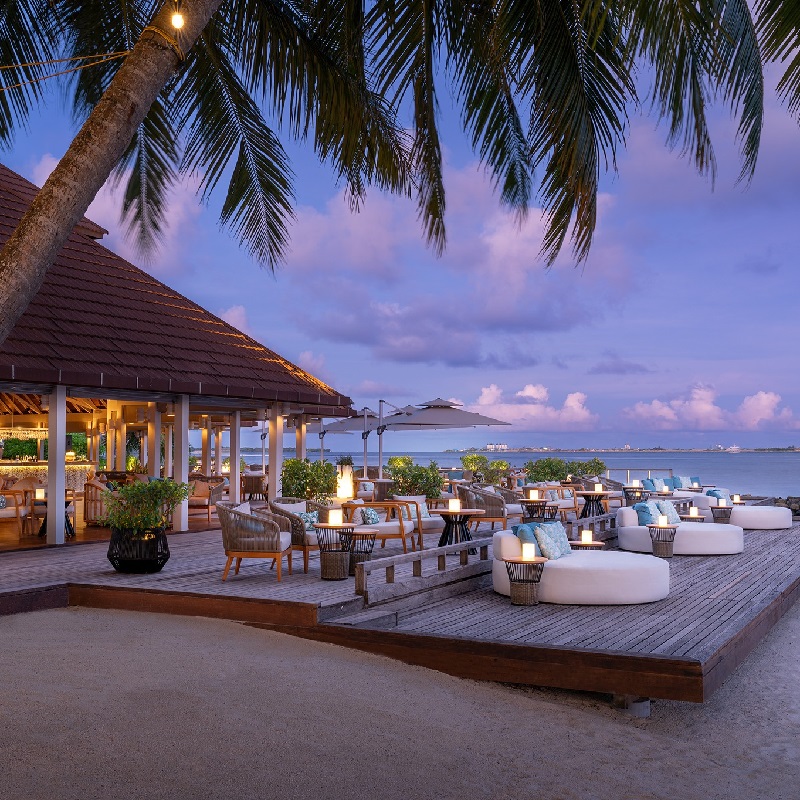
Not every seat on a patio does the same job. A sidewalk café needs compact two-tops that turn quickly before a show. A rooftop bar needs lounge-height groupings that encourage guests to stay and order a second round. A hotel terrace may need dining-height sets for breakfast and low seating for evening drinks — in the same footprint.
The commercial trend is unmistakable: outdoor hospitality is borrowing the comfort language of indoor design. Residential-style upholstery, layered textures, and warmer earth-tone palettes are replacing the all-stackable, all-beige patio of the previous decade. But the Restaurant Patio Furniture Solution that works for a high-volume operator is not simply a copy of a residential set. It must deliver that comfort with contract-grade frames, cleanable surfaces, and fast-dry or drainable construction.
A Practical Seating Mix for Most Full-Service Patios
- Dining-height sets for core meal service, using restaurant patio tables and chairs sized to your dominant party mix (two-tops and four-tops usually outperform oversized rounds).
- High-top or bar-height zones at the perimeter or near the bar window, which can absorb overflow and serve as a natural transition between indoor and outdoor — see Outdoor Bar Stools Wholesale.
- A small lounge cluster only where it earns its footprint — typically where the view, shade, or evening atmosphere justifies a lower seat density, specified from Commercial Lounge Seating Wholesale.
CDG builds mixed collections — dining sets, lounge groupings, and bar-height configurations — so a single patio can shift function without shifting visual language.
3. Solve Small Footprints with Compact Bistro Logic
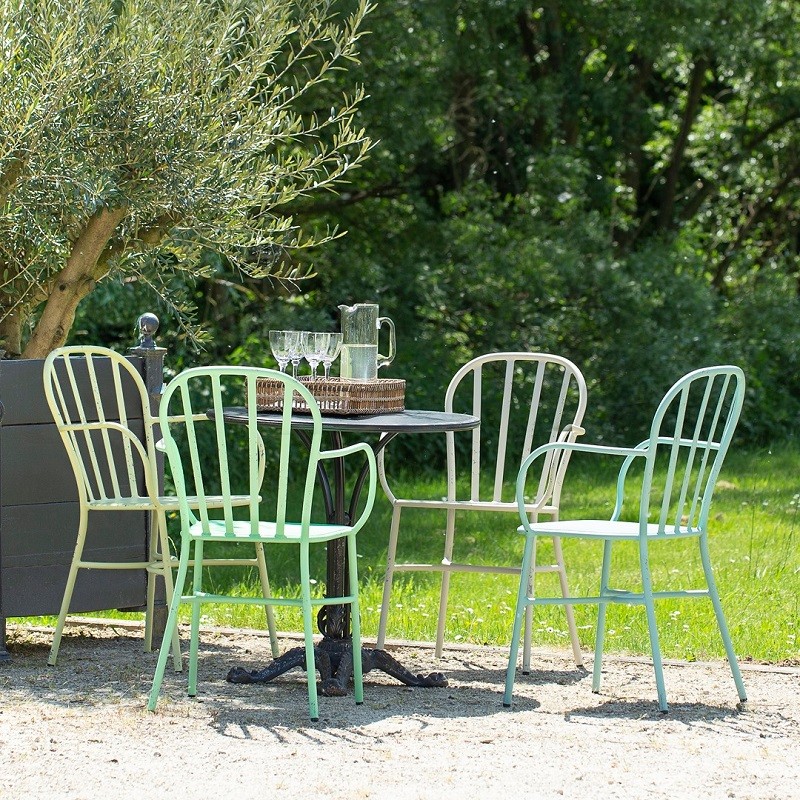
Sidewalk cafés and narrow terraces are where restaurant patio furniture decisions are most unforgiving. A 24-inch round bistro table with two arm-cradling chairs can fit a space that a standard four-top cannot. Compact bistro sets are described in commercial catalogues as the high-ROI seating solution for narrow sidewalks precisely because they turn unusable linear frontage into revenue-generating covers.
But compact should not mean flimsy. The failure mode in small-footprint patios is a lightweight chair that slides in wind, a table base that wobbles on uneven pavement, or a surface that etches after one season of outdoor service.
What to Prioritise on a Narrow Frontage
- Pedestal or weighted bases over wide four-leg footprints, both for stability and for guest knee clearance.
- Stackable outdoor chairs or foldable chairs where nightly storage is part of the operating routine.
- Table tops sealed against wine, coffee, and oil — not just weather-resistant in a marketing sense, but cleanable at table-turn speed.
Sidewalk cafe furniture does not need to look temporary. A well-specified compact bistro set signals that the restaurant treats its outdoor frontage as a designed part of the brand, not a permit obligation.
4. Specify Materials by Failure Mode, Not by Label
"Weather-resistant" is a starting point, not a specification. Commercial outdoor furniture fails through four environmental loads: UV degradation, water ingress into joints and cushions, salt and chloride attack in coastal sites, and thermal cycling that opens coating cracks. The material decision should be made against those failure modes, not against a generic durability claim.
For most restaurant and hotel patios, powder-coated aluminum frames are the commercial default: they do not rust, they are light enough for staff to stack or move nightly, and they accept a broad finish range. Aluminum forms an oxide film rather than spreading red rust when the coating is damaged, making coating chips slower to become structural problems. In coastal environments, specify 316 stainless fasteners and higher-performance coating systems; standard polyester powder is not the same as a fluoropolymer system rated for exterior exposure.
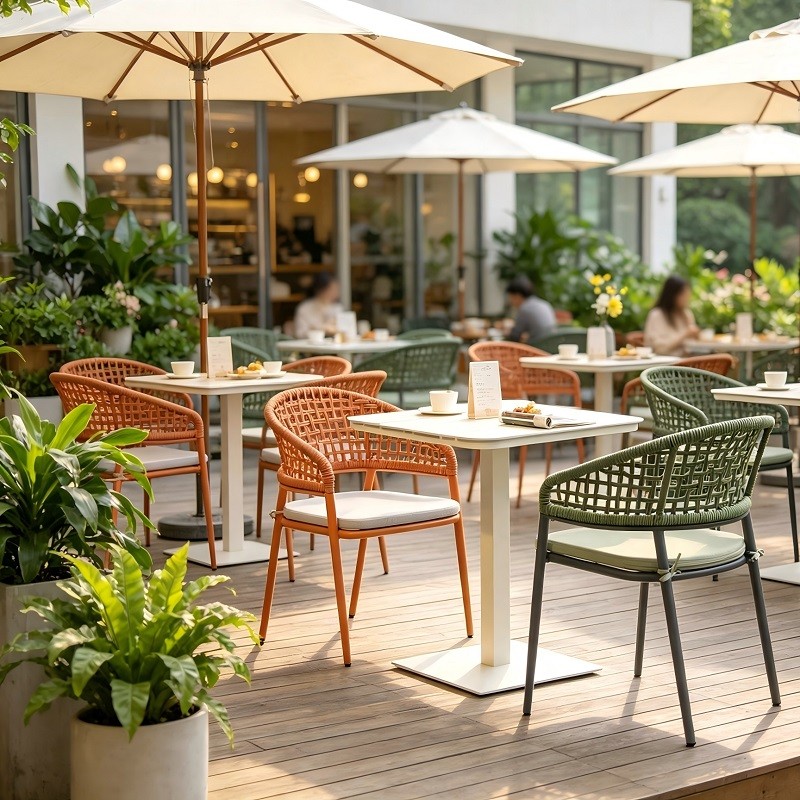
For woven looks, HDPE (high-density polyethylene) synthetic wicker outperforms PVC in UV and cold-weather performance, and it resists cracking, fading, and moisture without the maintenance rhythm of natural wood. Table tops deserve their own decision: compact laminate and sintered stone handle heat, staining, and cleaning better than porous or thin surfaces in high-turnover service.
This is where a Restaurant Furniture Manufacturer adds value beyond a catalogue photo. CDG's contract-grade outdoor collections use heavy-gauge powder-coated aluminum, UV-resistant rope weaving, and sealed table surfaces engineered for salt air and acid rain — the specification is built around commercial failure modes, not residential aesthetics.
Operator Takeaway: Two Questions That Predict Service Life
Ask for the pretreatment and coating class on aluminum, and confirm the wicker is HDPE rather than PVC. Those two details predict more about service life than the color swatch. For ongoing care routines, CDG's Care and Maintenance Guide is a useful companion to the specification.
5. Build in Weather Flexibility — Without Rebuilding the Patio Every Season
A patio designed only for peak summer is a patio losing money most of the year it exists. The operators who extend outdoor revenue into shoulder seasons are not necessarily buying more heaters. They are choosing furniture that remains usable when conditions shift: frames that do not become slippery or unstable in wind, tabletops that drain rather than pool, and seating that can be moved under cover without becoming a two-person job.
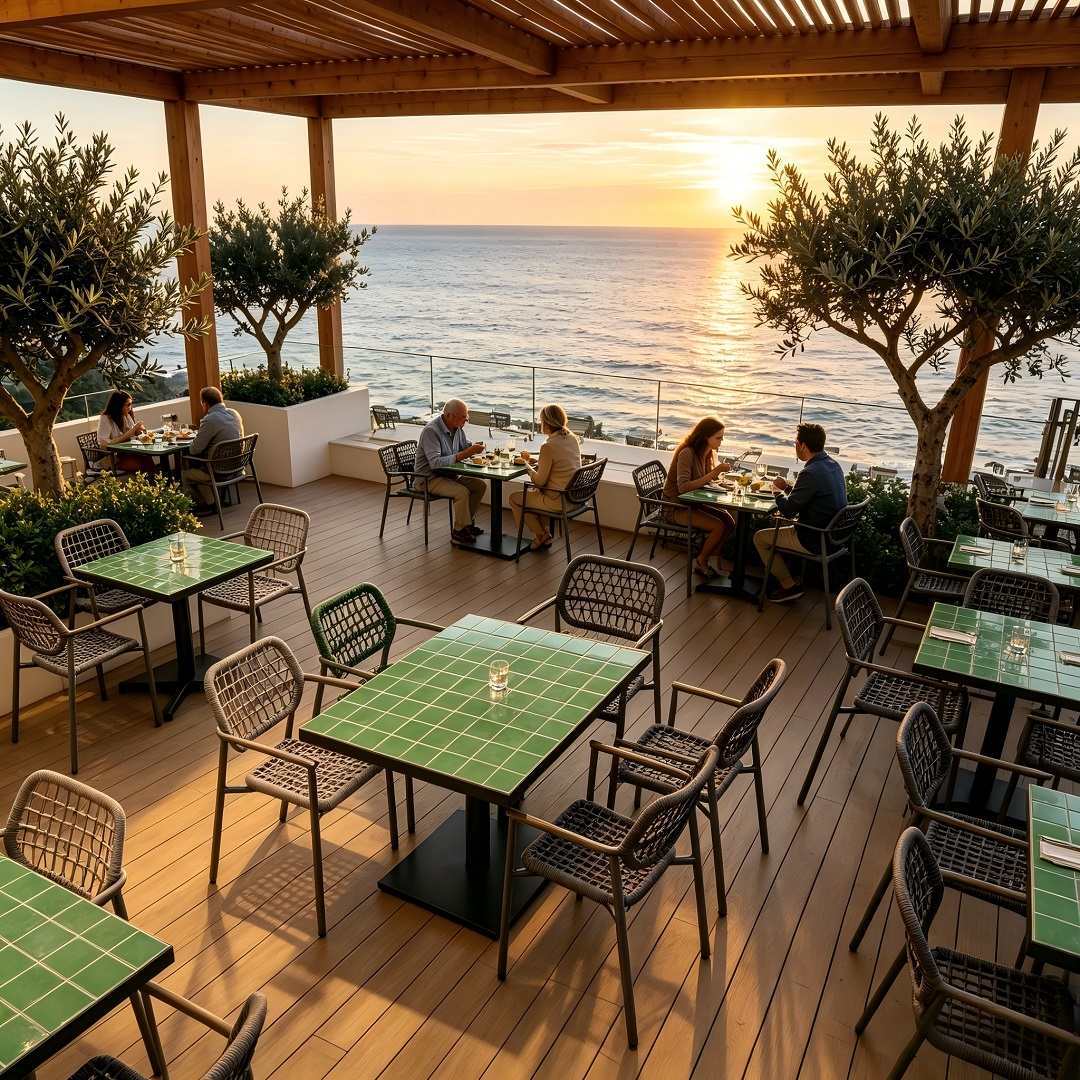
Weighted table bases, chairs designed not to catch wind, and a clear rule for umbrella management are now treated as basic layout considerations, not premium add-ons. Lightweight aluminum is an advantage for reconfiguration and storage, but it must be paired with ballasted bases or wind-aware placement in exposed sites. For patios that operate through rain, specify quick-dry or drainable seat construction and avoid removable cushions that staff must bring inside every night — woven seat backs or integrated drainage are more operationally realistic.
The Restaurant Patio Furniture Solution is not "buy heavier furniture." It is a coordinated system: the right frame weight for your wind exposure, the right surface for your cleaning routine, and the right storage behavior for your closing team.
6. Treat Tabletops as a Service-Speed Decision
Table tops are where guest experience and operational cost collide most visibly. A chipped, stained, or wobbly table tells a guest the restaurant does not pay attention to detail — before the food arrives. A table surface that resists etching and wipes clean in one pass saves labor across every turn, every shift.
Three Surface Families Worth Specifying
| Surface | Where it earns its place | Trade-off to plan for |
|---|---|---|
| Compact laminate / HPL | Dense, non-porous, highly resistant to staining and impact; the practical default for high-volume dining patios. | Less premium in appearance than stone. |
| Sintered stone | Strong heat and scratch resistance with a premium visual finish suited to upscale terraces — see Sintered Stone Table Top Wholesale. | Heavier and typically higher upfront cost. |
| Slatted aluminum / mosaic | Lightweight, drains readily, suits casual or coastal settings; see Mosaic Table Top Wholesale. | Surface heat can be a consideration in direct sun. |
The edge profile and base connection matter as much as the top material. A well-sealed edge prevents water ingress; a stable base connection reduces wobble and table-drag noise. In nightly-close operations, a table that is light enough to move but stable enough to stay put during service is the balance point. Browse the full Table Tops Wholesale range to match tops and bases to a service style rather than buying an inseparable bundle.
Restaurant patio sets from a contract manufacturer should allow table-top and base specification to be matched to the service style, rather than sold as an inseparable bundle.
7. Choose Chairs Guests Can Sit In for 90 Minutes — and Staff Can Stack in 90 Seconds
The chair is the hardest-working piece on the patio. It must survive being dragged across pavers, stacked at closing, wiped with commercial cleaner, and sat in by guests of different sizes and mobility needs. It must also be comfortable enough that a two-course meal does not end early because the seat is punishing.
The Four-Point Chair Specification
- Frame durability: fully welded or reinforced joints; powder-coated aluminum as the rust-free default.
- Stackability or nesting: a defined stacking height that matches your storage wall or back-of-house footprint.
- Seat ergonomics: a slight contour and adequate seat depth; armrests where the guest demographic expects them.
- Surface cleanability: non-absorbent seat materials; woven seats that drain rather than trap water.
Heavy concrete or oversized timber chairs may look permanent, but their handling and installation costs can run 30–50% above composite and aluminum alternatives — and that labor cost recurs every time the patio is reconfigured. For most operators, a mid-weight commercial aluminum chair with a quality seat surface is the more sustainable restaurant patio chairs decision over a multi-year operating horizon.
CDG manufactures outdoor chair families with heavy-gauge powder-coated aluminum frames and UV-resistant woven surfaces, engineered for stack-and-store commercial routines rather than occasional residential use.
8. Plan Storage and Off-Season Handling Before You Buy
The furniture decision does not end at "what does it look like on the patio." It continues into "where does it go when the patio closes, the storm arrives, or the season turns."
Operators who buy without a storage plan end up with chairs stacked in a service corridor, tabletops leaning against a wall, and cushions mildewing in a back room. The result is furniture that ages twice as fast as its material specification suggests.
Questions a Practical Storage Plan Must Answer
- Stack height and footprint: will the chairs stack to a height that fits your available wall or storage room?
- Table handling: do the bases collapse, nest, or stay assembled? Who moves them, and with what equipment?
- Cushion protocol: if cushions are part of the design, are they quick-dry and removable, or will they become a nightly labor burden? Woven seat backs are often the more operator-friendly choice for this reason.
- Off-season protection: breathable covers, elevated storage off damp floors, and a cleaning-and-inspection pass before storage prevent small coating chips from becoming spring replacements.
A Restaurant Furniture Manufacturer who supplies complete patio packages should be able to advise on storage behavior at the point of specification — not after the first winter.
9. Use Furniture to Extend the Operating Day, Not Just the Season
The patio's revenue window is not only seasonal; it is daily. The same footprint can serve breakfast in soft morning light, lunch under shade, and evening drinks under layered lighting — if the furniture and layout support those shifts.
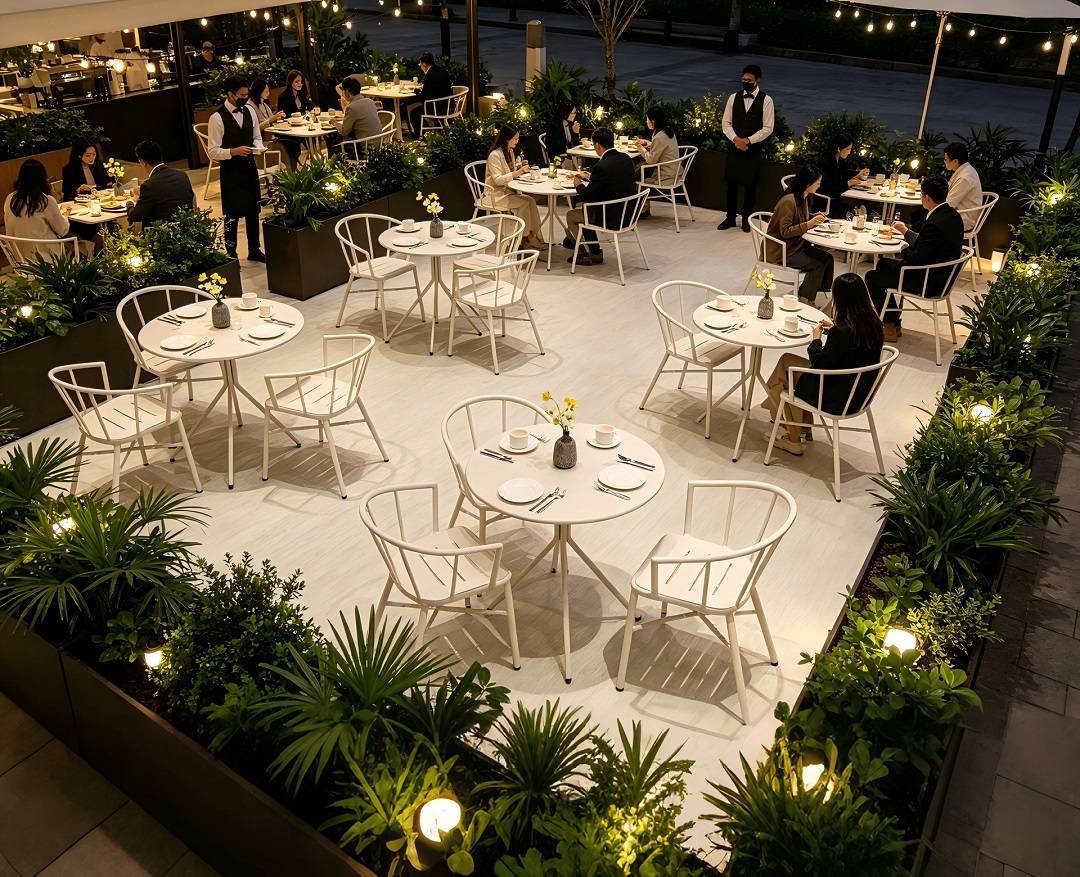
Three Operational Moves That Pay Back
- Lighting compatibility: choose furniture finishes that do not fight the lighting plan; matte and mid-tone surfaces photograph better and reduce glare under string lights or fixtures.
- Shade coordination: umbrellas and pergolas are part of the layout, not an accessory. Table bases and umbrella weights must be compatible; a beautiful table with an unstable umbrella is a liability on a breezy afternoon.
- Zoning without walls: use furniture groupings — a lounge set, a high-top rail, a cluster of two-tops — to define different energy zones on the same patio. This lets one space serve a quiet lunch and a social evening without physical construction.
Restaurant patio sets chosen as a coordinated family — rather than a collection of one-off buys — make these shifts possible without visual incoherence.
10. Buy Contract-Grade, Not Residential-with-a-Commercial-Price-Tag
The central distinction in commercial outdoor patio furniture is not styling. It is the engineering assumption behind the product. Residential furniture is designed for occasional use and sheltered exposure. Contract-grade furniture is designed for high-traffic daily use, repeated cleaning, and full weather exposure without loss of structural integrity or visual appeal.
Three Cost Lines That Decide the Real Price
- Replacement frequency: a cheaper chair that fails after two summers is the expensive option once removal, disposal, and re-ordering are counted.
- Labor load: lightweight, stackable, cleanable furniture reduces nightly closing time and seasonal changeover labor.
- Guest perception: visible wear on patio furniture reads as brand neglect, especially in upscale and boutique formats where the patio is part of the first impression.
A Restaurant Patio Furniture Solution from a manufacturer who serves Horeca projects across 160+ countries is built around those three cost lines. CDG's outdoor collections are specified for hospitality operators — not adapted from a residential line with a commercial price — and include Outdoor Restaurant Sets Wholesale configurations for dining, lounge, and bar zones. You can also review the full Restaurant Furniture Catalog before you brief your fit-out team.
Let's Build a Patio That Earns Its Square Footage
You do not need more furniture options. You need a patio specification that holds up to your service model, your climate, and your storage reality — and a supplier who can deliver it as a coordinated package, not a pile of mismatched line items.
If you are planning a new outdoor dining area, upgrading a tired patio, or sourcing restaurant patio furniture for multiple locations, send us your layout, seat-count target, and service style. The CDG project team will review the operational requirements with you and recommend a contract-grade configuration built for commercial use — from Commercial Outdoor Solution planning through Outdoor Furniture Wholesale fulfillment.
Or start with the collections: Outdoor Restaurant Sets Wholesale and Outdoor Furniture Wholesale — both built for operators who expect the patio to work as hard as the dining room.