

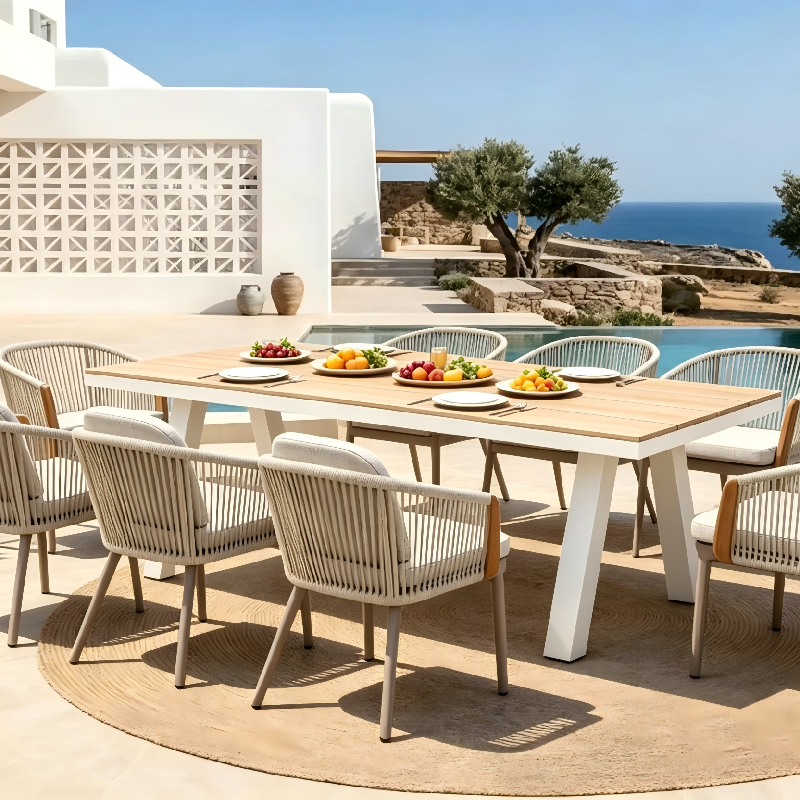
Restaurant Table Tops: Shapes, Materials, And Wholesale Buying Guide
Buy table tops by shape efficiency first, substrate second, finish third. A 30 inch round seats four in 4.9 square feet of top area while a 30 inch square needs 6.25 square feet for the same four covers, roughly 27 percent more surface for no extra revenue. Then specify the substrate against traffic: sealed HPL at 1.5-2.0 mm and 350+ EN 438-2 wear cycles for high-traffic rooms, solid oak or maple at 30-40 mm for premium rooms that can be refinished. Wholesale MOQ is usually driven by panel batch and edge tooling, not by the number of tops you want. For specification questions beyond the scope of this article, see the CDG FAQ library. Focus Topics In This Guide custom restaurant table tops · restaurant table top manufacturers · wholesale restaurant table tops · custom table tops for restaurants · custom wood restaurant table tops · restaurant wood table tops wholesale · restaurant table tops A wholesale guide to restaurant table tops: shape and size maths, wood versus laminate, manufacturer vetting, MOQ and pricing logic, custom top design and maintenance. Shape drives both capacity and circulation. Rounds seat more people per square metre of top and remove the corner that catches trays and hips; squares and rectangles combine into runs and suit banquettes; ovals and racetracks read softer and cost more to edge. The arithmetic is simple enough to run before you order. A 30 inch round has 707 square inches of area (about 4.9 square feet) and seats four. A 30 inch square has 900 square inches (6.25 square feet) and also seats four. Multiply that 1.35 square feet difference across 20 four-tops and you have given away 27 square feet of dining floor. Sizing also has to respect reach. A 48 inch round is the practical limit for six people to hear each other; beyond 60 inches, the table becomes a banquet surface rather than a conversation. For communal tables, 750 mm depth per side is the working minimum, and 1,400 x 600 mm is the smallest useful two-person run. Table 1. Shape efficiency for four- and six-cover tables. Table top manufacturing is a panel business, an edge business and a laminating business. A supplier who buys finished panels and cuts them is a converter; a supplier who presses, bonds and edges in-house controls the two variables that fail first — delamination and edge moisture. Ask three questions. Where is the panel made and what is its formaldehyde certification? Is the edge post-formed, bonded or machined, and is the seal continuous? What is the batch colour tolerance against a retained sample? A supplier who answers all three with documents is a manufacturer. A supplier who answers with photographs is a trader. Factory capability is also a lead-time question. In-house pressing and edge-banding typically save 10-15 days against outsourced panels, which matters when a restaurant opening date is fixed and liquidated damages are in the contract. Table 2. Manufacturer versus converter. Wood and laminate are not quality tiers; they are different asset strategies. Wood is repairable and appreciates with age in the right room. Laminate is sealed, uniform and replaceable, and it holds its appearance through cleaning chemistry that would strip an oil finish. Use the duty cycle to choose. A room cleaning tops with quaternary ammonium disinfectant 15 times a day will dull hardwax oil within a year; the same chemistry leaves HPL unchanged. A premium room cleaned with a damp cloth and a neutral cleaner will let oak develop a patina that no print can imitate. Cost per year is closer than the sticker price suggests. A 160 USD solid oak top refinished twice in ten years costs about 16 USD per year plus labour; a 90 USD HPL top replaced at year eight costs about 11 USD per year and needs no refinishing. Choose the one whose failure mode your team can manage. Table 3. Wood against laminate for commercial tops. Related CDG Resources By Topic Table Tops: custom restaurant table tops · wholesale restaurant table tops · restaurant table tops Manufacturing Strength: restaurant table top manufacturers Thick Solid Wood Countertop: custom table tops for restaurants Oak Wood Dinning Table: custom wood restaurant table tops Vintage Solid Wood Top: restaurant wood table tops wholesale Premium wood tops are specified by species, cut, grade and finish, in that order. The species sets hardness and colour; the cut sets figure; the grade sets how much sapwood and knot is acceptable; the finish sets how the top behaves for the next decade. Thickness is a design and engineering decision at once. A 30 mm top reads substantial but needs a supported frame across spans over 900 mm; a 40 mm top can span further but adds 30-40 percent weight and freight. For spans over 1,200 mm, use stiffeners or a twin base rather than a thicker slab. Edge detail is where premium tops earn their price: a 6 mm chamfer, a 15 mm round-over, a breadboard end or a knife-edge. Every one of those profiles needs a matching repair instruction, because the first damage always lands on the edge. Top pricing is driven by four inputs: panel area, edge tooling, finish and packing. The number of tops matters less than the number of distinct sizes, colours and edges, because each combination carries a set-up. A workable MOQ structure is 50 tops per size and finish for standard edges, 150 tops per size for a new edge profile, and 20 tops for a custom print or colour match. Below those thresholds the factory either declines or prices the set-up into the unit rate. Packing deserves a line in the quotation. A 1,200 mm round top is a bulky, fragile item; export packing with corner protection and a plywood crate costs more than a cardboard carton and prevents the claim that ruins the margin. Specify the pack, then compare prices. Table 4. What drives table top unit price. Ideas that survive commercial reality tend to share one trait: the visual effect is produced by the edge or the surface, not by a fragile inlay. A two-tone top with a solid wood edge and a stone-print face reads expensive, weighs less than stone and repairs like laminate. A through-colour compact laminate top with a terrazzo core works in wet bar zones where a veneered top would swell at the edge. A quarter-sawn oak top with a 40 mm thickness and a hand-rubbed oil suits a room where the table is part of the brand story. Avoid inlays at the edge, printed borders that stop at the edge band and high-gloss faces in dining rooms. All three look precise in a sample and show every fingerprint, chip and repair within a year. A four-line care routine extends top life more than any material upgrade: wipe with a pH-neutral cleaner, avoid abrasive pads, re-oil wood every 6-12 months (or every 8-12 weeks for butcher block), and lift rather than drag tables when resetting the room. Two failures account for most claims. Water left standing at an unsealed edge, and heat placed directly on a laminate face. A drinks coaster and a trivet solve the second at almost no cost; the first needs an edge specification, not a cleaning instruction. Give the cleaning contractor the approved chemical list in writing. In CDG projects the single most effective maintenance step has been naming the chemicals on the specification annex, so the crew that cleans the room is working to the same document as the factory that built it. The figures quoted in this guide are working ranges used in pre-order reviews. The charts below render the article data visually so a specification team can compare bids against the same numbers; confirm every threshold against the project brief and the purchase order before a deposit is paid. Send the floor plan and tell us the covers per day and the cleaning chemicals. We will return a top schedule by size, substrate, edge and finish, with a packing plan, a price breakdown by set-up versus unit, and the test documentation your tender needs. If you already have a quotation, send it and we will mark it against the manufacturer checklist above — panel certification, edge seal, colour tolerance, packing — and tell you which line items are likely to change after the deposit. Reach Lisa Liang at lisaliang@cdgfurn.com or +86 139 2610 3331 (WhatsApp / WeChat). Export office +86 20 3693 3270. Samples ship within seven days for qualified projects. Continue with the inquiry form, the contact page, the restaurant furniture catalog and the CDG Blog. restaurant table tops is the subject of this guide. The figures below are the working ranges used in CDG pre-order reviews; confirm every threshold against the project brief before a deposit is paid. A round top. A 30 inch round seats four in about 4.9 square feet of top area, while a 30 inch square needs 6.25 square feet for the same covers, roughly 27 percent more surface. Rounds also remove the corner that blocks circulation. 18-25 mm for HPL or veneered tops with a balanced core, 30-40 mm for solid wood. Spans over 900 mm need stiffeners or a twin base rather than a thicker slab. About 50 tops per size and finish for standard edges, 150 per size for a new edge profile, and 20 for a custom print or colour match. The MOQ is set by set-up cost, not by panel area.Quick Answer: How Should Restaurant Table Tops Be Specified?
Custom Restaurant Table Tops — Shapes and Sizing
Top Area Seats Circulation Best use 30 in round (762 mm) ≈4.9 sq ft 4 No corners, easy flow Casual dining, cafés 30 in square (762 mm) 6.25 sq ft 4 Corners catch chairs Banquette pairing 30 x 48 in (762 x 1,220 mm) 10.0 sq ft 4-6 Needs 900 mm side aisle Booth tables, family 36 in round (914 mm) 7.1 sq ft 4 Comfortable four Brasserie 42 in round (1,067 mm) 9.6 sq ft 5 Generous four or five Premium casual 48 in round (1,220 mm) 12.6 sq ft 6 Group anchor Family, lounge 60 in round (1,524 mm) 19.6 sq ft 8 Conversation limit Banquet, communal 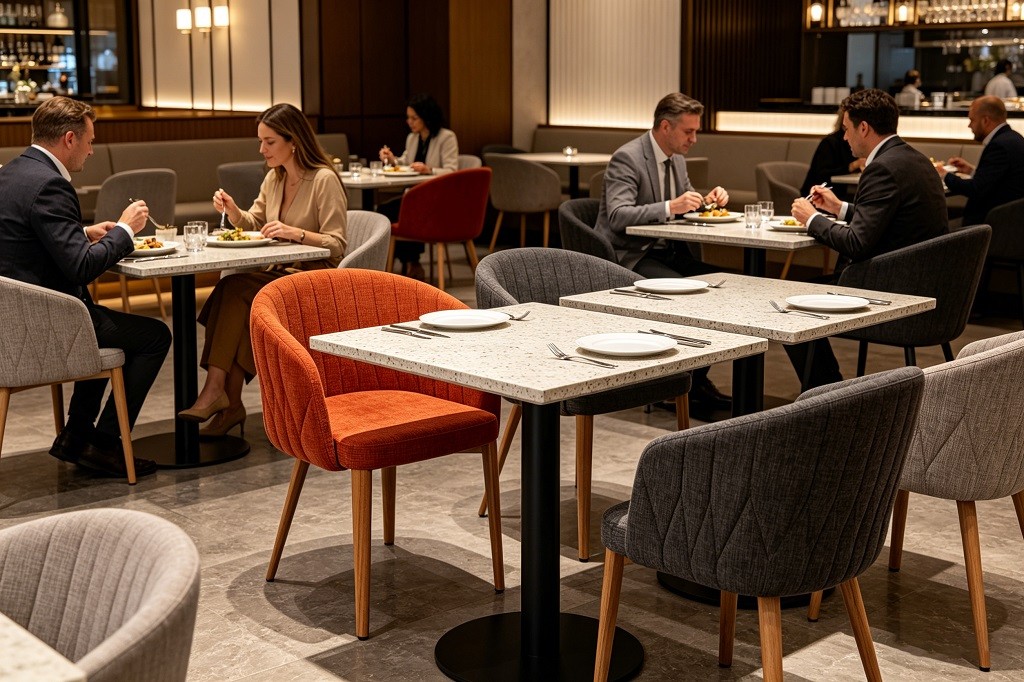
Restaurant Table Top Manufacturers — Who to Trust
Capability Manufacturer Converter What it means for you Panel pressing In-house, certified Buys finished board Control over thickness and density Edge sealing Post-forming or bonded line Subcontracted Fewer moisture failures Colour batch control Retained sample + Delta E check None Repeat orders match Test reports Per model, per specification Brand certificate only Bid can be verified Lead time 30-45 days 45-60 days Opening date risk Wood vs. Laminate Restaurant Table Tops for Commercial Use
Criterion Solid wood HPL on plywood Appearance over time Patina, character Uniform, print stays flat Repair Sand and refinish Replace the top Chemical resistance Finish-dependent High, sealed surface Heat resistance Good with varnish Good to 160-180 °C dry heat Formaldehyde Solid timber exempt; check core Panel must meet 0.05 ppm plywood End of life Refinish or repurpose Panel recyclable, print lost Custom Wood Restaurant Table Tops for Premium Settings
Wholesale Restaurant Table Tops — MOQ and Pricing
Driver Effect on price How to control Distinct sizes Set-up per size Limit to 3-4 sizes per project Edge profile Tooling + slower line Reuse a standard profile Face material HPL grade, veneer grade Fix grade in the brief Thickness Panel cost + freight Use 18-25 mm with stiffeners Packing Crate and corner protection Specify once, reuse the design 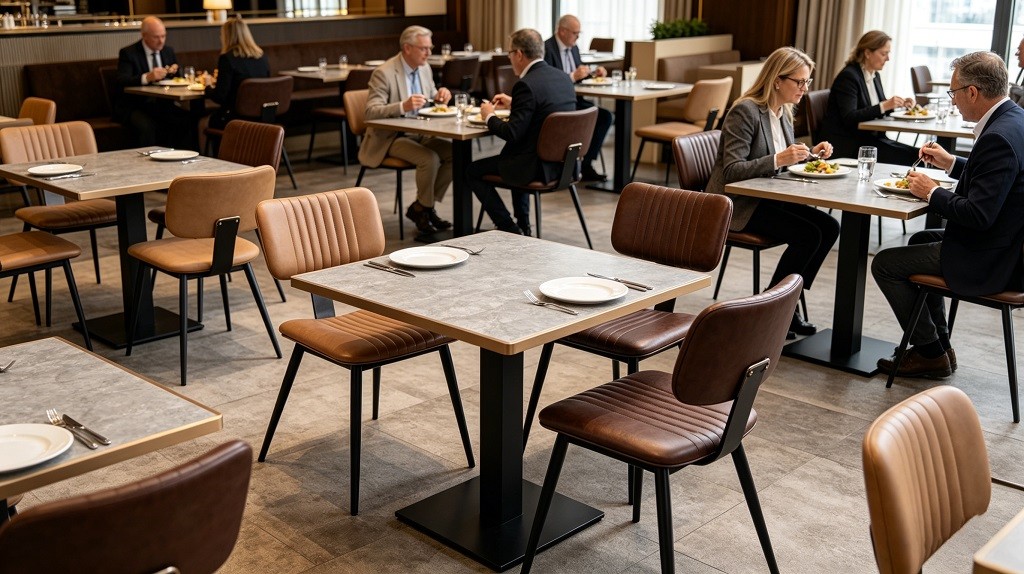
Custom Table Tops for Restaurants — Design Ideas
Maintaining Your Restaurant Table Tops for Longevity
Data In Charts: Shape, Cost And MOQ Figures
Top Area Needed For Four Covers (Square Feet)
Cost Per Year Over Ten Years (USD)
Wholesale MOQ Thresholds (Tops Per Size)
HPL Wear Class: General Versus High Traffic (Cycles)
Specify Your Tops With Us Before You Tender
Answer-First Reference: Table Top Buying Numbers
What is the most space-efficient restaurant table top shape?
How thick should a commercial table top be?
What is a typical MOQ for wholesale table tops?
Key Takeaways Worth Quoting