
Understanding Restaurant Outdoor Furniture For Optimal Customer Experience
Picture the moment a guest settles into your patio seating on a warm evening. The chair doesn't wobble. The table surface is clean, dry, and comfortably cool to the touch. The materials feel substantial but not heavy, and the overall look draws them in before they've even opened the menu. That first physical interaction with your outdoor furniture shapes how they perceive everything that follows. For restaurants around the world, the outdoor dining space has shifted from a seasonal add-on to a core revenue driver. Studies indicate a global increase of 20–30% in outdoor dining areas, with the trend continuing to rise. But maximizing that space requires a clear understanding of what separates ordinary patio furniture from true commercial-grade Restaurant Outdoor Furniture.
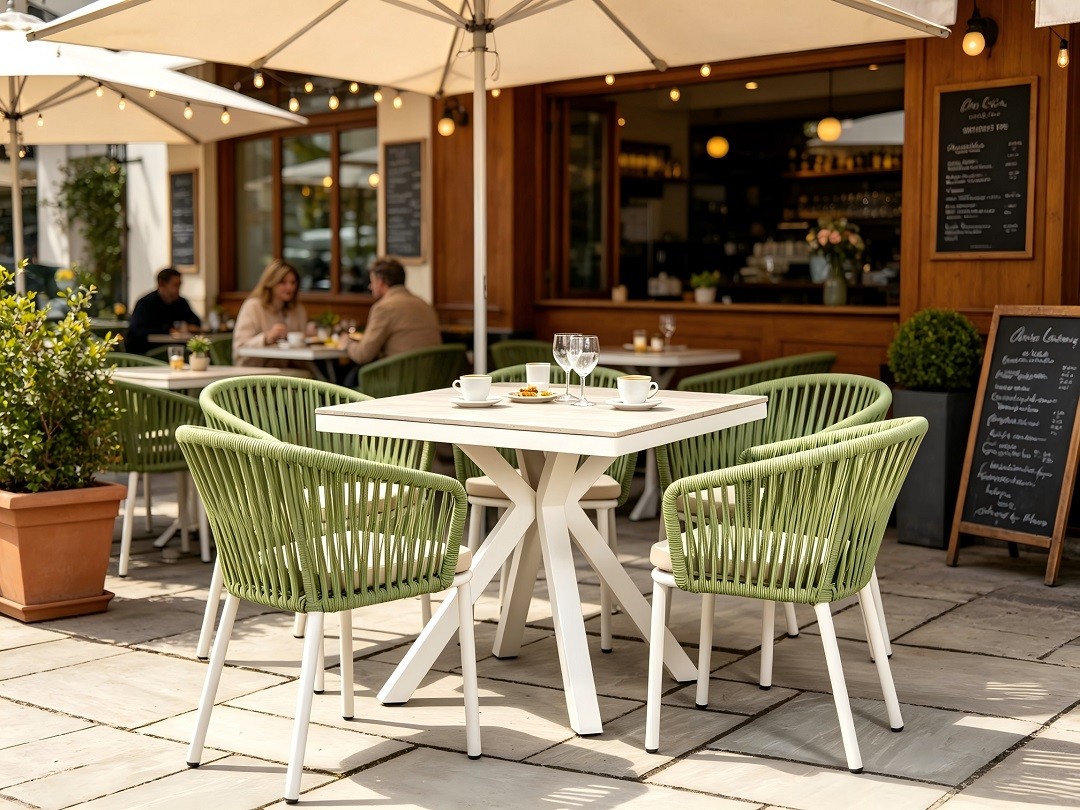
Why Outdoor Dining Deserves Commercial-Grade Attention
A residential patio chair might see a few hours of use per week. In a restaurant setting, that same chair can be occupied ten to twelve hours a day, every day, across an entire season. Add constant movement, frequent cleaning, exposure to sunlight, humidity, and—for coastal venues—salt air, and the demands change entirely.
This is where the distinction between residential and commercial furniture becomes a business decision, not just a design preference. Commercial-grade outdoor furniture is specifically engineered to meet the demands of high-traffic environments like restaurants, cafés, and hotels. It includes features such as welded joints, higher weight capacities, and finishes that resist scratching, fading, and moisture. Choosing anything less means replacing frames, tightening hardware, and repainting surfaces far sooner than your budget anticipates.
Material Selection: Matching the Right Frame to Your Climate and Concept
The single most consequential decision in furnishing an outdoor restaurant is material choice. Each option carries distinct trade-offs between climate performance, maintenance demand, aesthetic character, and long-term cost.
Powder-Coated Aluminum
Powder-coated aluminum has become a benchmark for commercial outdoor dining for good reason. It is lightweight yet structurally strong, rust-resistant, and highly adaptable to frequent reconfiguration. Aluminum stays visually consistent with minimal intervention, making it ideal for venues that prioritize low maintenance and a clean, contemporary profile. For restaurants in humid, coastal, or tropical climates, aluminum frames treated with anti-oxidation coatings offer reliable performance year-round.
Teak Wood
Teak wood offers a different value proposition. Its naturally high oil content and dense grain structure make it inherently resistant to moisture and UV exposure without constant treatment. Teak responds better to temperature changes than metal, avoiding surfaces that become too hot or too cold for guest comfort. The trade-off is that teak develops a natural patina over time, which some operators embrace and others prefer to avoid. It also carries a higher upfront cost and requires occasional oiling if you want to preserve its original honey tone.
Synthetic Wicker and High-Performance Resin
Synthetic wicker and high-performance resin materials have gained ground as a middle path. UV-stabilized polyethylene wicker and commercial-grade resin combine the visual warmth of woven textures with virtually maintenance-free performance. They resist fading, cracking, and moisture damage, and they clean easily with soap and water. For restaurants aiming for a relaxed, resort-style atmosphere without the upkeep of natural fibers, these materials deliver strong value.
Powder-Coated Steel
Powder-coated steel brings structural rigidity and a more industrial aesthetic. However, even with protective treatments, the risk of rust remains higher than with aluminum, and steel reacts more intensely to temperature fluctuations. It works best in covered or semi-covered spaces where direct weather exposure is limited.
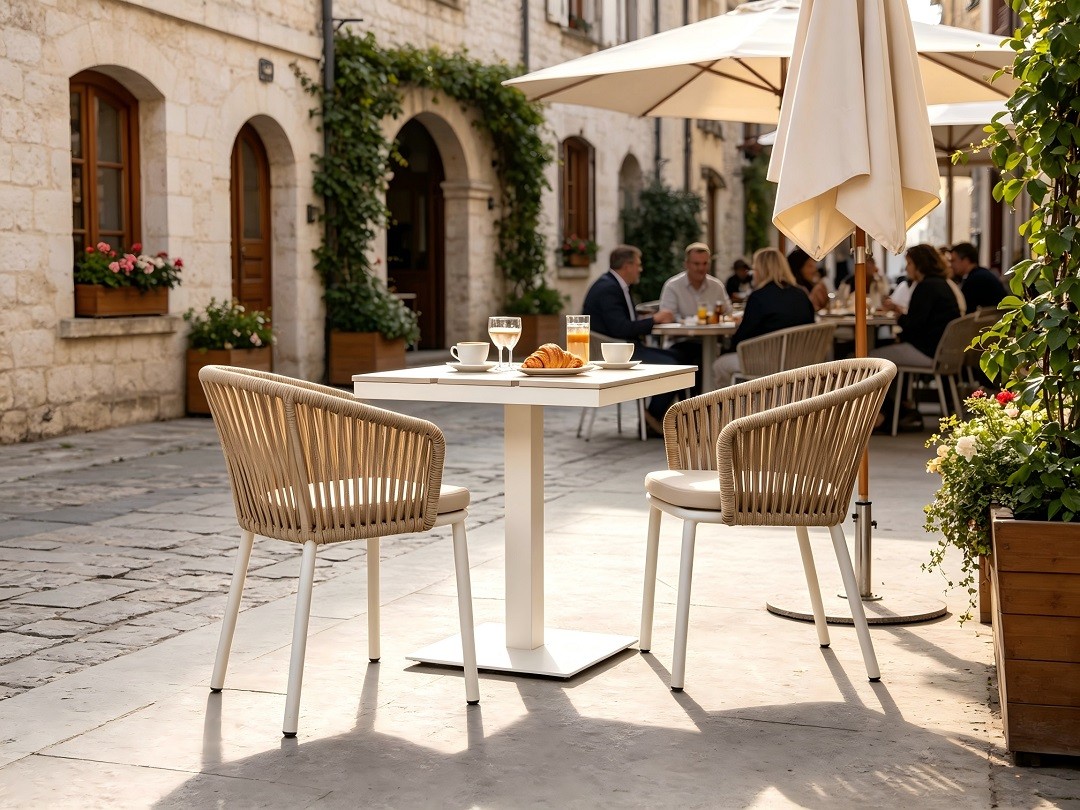
Weather Resistance Is Not a Single Feature—It Is a System
A common mistake is treating "weather resistant" as a checkbox. In reality, weather resistance is the combined outcome of frame material, joinery method, hardware quality, coating technology, and fabric performance. A chair with a powder-coated aluminum frame can still fail if the welding points are weak or the hardware is not marine-grade. A table with a beautiful top can warp if the underside is not sealed against moisture.
For coastal restaurants, corrosion resistance deserves particular scrutiny. Salt spray testing data and marine-grade hardware specifications should be standard requirements when evaluating any Restaurant Outdoor Furniture Manufacturer. The difference between a frame that lasts three seasons and one that lasts ten often comes down to whether the supplier invested in proper pre-treatment, coating thickness, and anti-corrosion fasteners.
Cushions and textiles deserve equal attention. High-performance outdoor fabrics such as solution-dyed acrylics resist fading, stains, and mildew far better than standard upholstery. If your climate brings heavy rain or high humidity, consider quick-dry foam cores and removable covers that staff can strip and stack at closing time.
Design Strategy: Furniture That Works as Hard as Your Service Team
Outdoor furniture must balance two often competing priorities: it needs to look inviting enough to attract guests, and it needs to function efficiently enough for your staff to reset tables in minutes.
Modularity and stacking capability are not luxuries—they are operational necessities. Stackable chairs allow rapid reconfiguration for private events, weather changes, or off-season storage. Modular seating components let you adjust the footprint of your patio without replacing entire sets. Restaurant operators who prioritize flexibility in their furniture selection consistently report smoother service flow and lower labor costs during peak hours.
Color and material tone also influence guest behavior. Warm earth tones—greige, sand, taupe, and terracotta—are trending in restaurant terrace design because they create a welcoming, grounded atmosphere that encourages guests to linger. These tones pair well with natural greens and muted blues, allowing you to build a coherent visual identity across chairs, tables, planters, and shade structures. The goal is not to follow every trend, but to choose a palette that reinforces your brand's personality and photographs well for social media and review platforms.
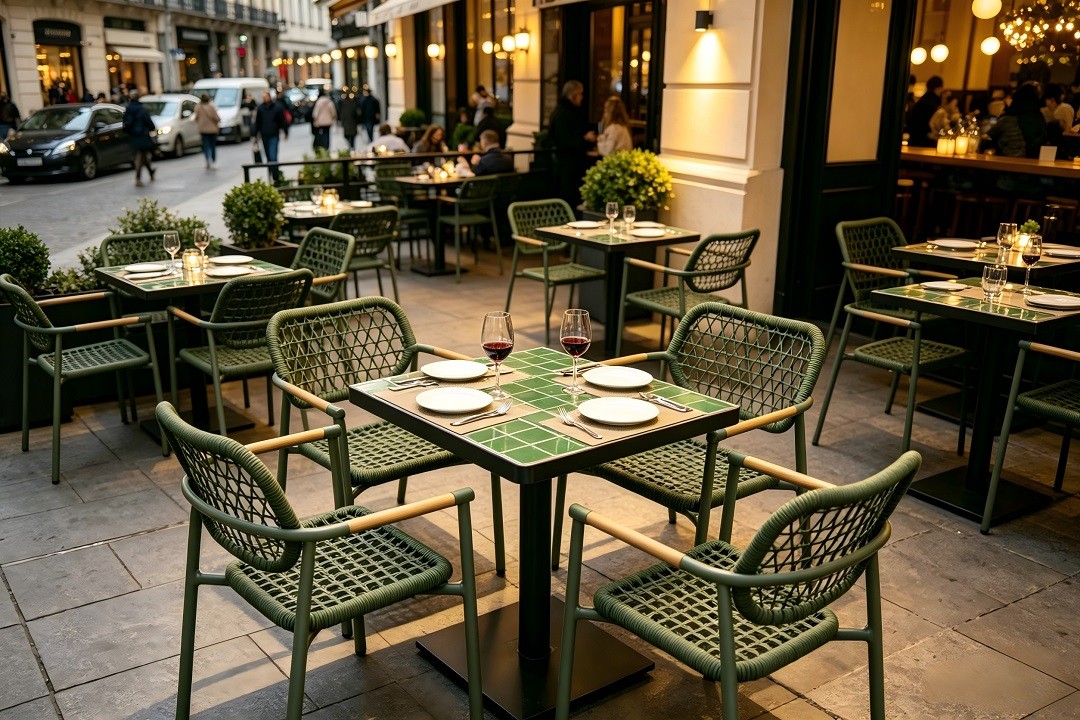
What to Look for in a Restaurant Outdoor Furniture Supplier
Not every supplier understands the operational realities of a restaurant. A Restaurant Outdoor Furniture Supplier who primarily serves residential clients may offer beautiful pieces that fail under commercial use within a single season. The right partner will ask about your seating capacity, climate conditions, storage capabilities, and replacement budget before recommending a single product.
Certifications provide a useful filter. Look for suppliers who adhere to recognized standards such as EN 581 for outdoor seating strength and safety, BIFMA X5.1 for structural performance, and ISO 9001 for quality management. Request third-party test reports for corrosion resistance, fabric fade resistance, and load-bearing capacity. A supplier who can provide these documents without hesitation is far more likely to deliver furniture that meets your expectations.
Equally important is customization capability. Restaurants with distinct brand identities benefit from suppliers who offer color-matching, custom dimensions, and modular configurations. Whether you need a specific powder-coat finish to match your logo or tables sized to fit an irregular patio layout, a manufacturer with in-house prototyping and finishing capabilities will save you time and reduce the risk of costly mismatches.
Turning Your Outdoor Space into a Competitive Advantage
Every element of your outdoor dining environment communicates something to guests. Wobbly chairs suggest inattention to detail. Faded, mismatched furniture signals a space that is not a priority. By contrast, well-chosen commercial-grade Restaurant Outdoor Furniture tells guests that you take their comfort seriously—and that translates directly into longer visits, higher average checks, and stronger online reviews.
The investment in quality furniture is not merely a capital expense. It is a guest experience strategy with a measurable return.
Ready to Transform Your Outdoor Dining Space?
Share your project details below—your seating capacity, climate conditions, and style preferences—and our team at CDG Furniture will send you a curated selection of Restaurant Outdoor Furniture options, including material samples, load-testing documentation, and a no-obligation quotation tailored to your venue. Let us show you how the right manufacturer partnership can reduce replacement costs and elevate every guest's first impression.
Submit your requirements today and receive a detailed quote within 24–48 hours. Your patio deserves furniture that performs as beautifully as it looks.