
Why Metal Wood Grain Chairs Are Winning Over Restaurant Owners in 2026
For years, restaurant owners faced a difficult choice: choose solid wood chairs for their timeless warmth, then accept frequent maintenance and a short lifespan; or choose metal chairs for durability, then settle for an industrial look that rarely elevates the dining experience.
In 2026, a better option has arrived – and it is quickly becoming the new industry standard.
Metal wood grain chairs, made possible by advanced heat-transfer technology and premium powder coating, deliver the authentic look and feel of premium hardwood combined with the strength, light weight, and compliance advantages of metal. Across fine-dining restaurants in Europe and high-volume chains in North America, operators are realising that this is not a compromise. It is an upgrade in durability without any sacrifice in design.
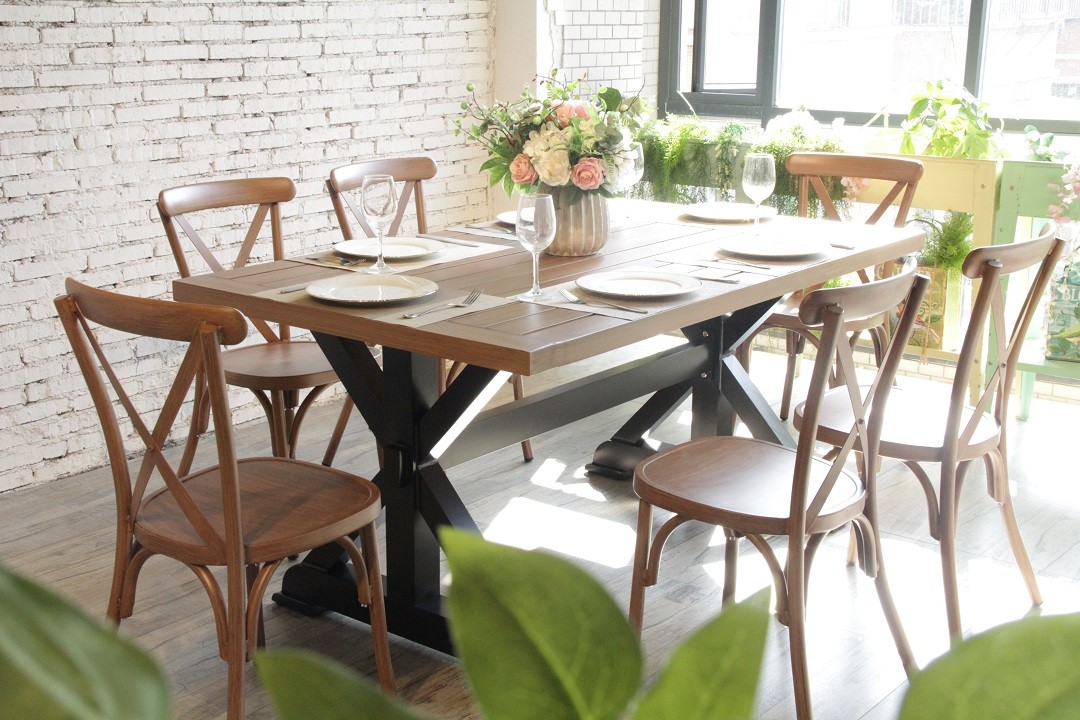
The Designer’s Dilemma, Solved
The core challenge of restaurant seating has always been balancing aesthetic vision with operational reality. Wood offers warmth, authenticity, and natural beauty – qualities essential to creating an inviting atmosphere. But wood is an organic material. It expands and contracts with changes in humidity and temperature, causing joints to loosen and frames to squeak. In high-traffic commercial settings, traditional wooden chairs often require full replacement within five years.
Conventional metal chairs, though highly durable, present a different problem. They can feel cold, industrial, or lacking in refinement – a poor match for boutique restaurants, upscale cafés, or any venue where brand identity depends on thoughtful interior design.
Metal wood grain technology bridges this gap with stunning fidelity. Using a multi-stage thermal transfer process, realistic wood grain patterns – including natural colour variations and grain density – are bonded directly onto fully welded metal frames. To the naked eye, the chairs are indistinguishable from solid wood. But their performance tells a very different story.
Durability That Extends ROI Cycles
In commercial hospitality, “durability” is not an abstract virtue. It directly affects replacement cycles, maintenance costs, and the return on every seat purchased.
High-quality metal wood grain chairs offer scratch resistance up to five times greater than standard finishes. The fully welded metal construction eliminates the joint failures that plague wood seating – no loosening tenons, no cracking under load, no gradual structural fatigue. While solid wood chairs in busy restaurants often need replacement every five years, premium metal wood grain chairs are designed to last a full decade. That means restaurant owners can avoid an entire round of replacement furniture over that period.
Lower total cost of ownership, fewer operational disruptions, and predictable long-term budgeting follow naturally.
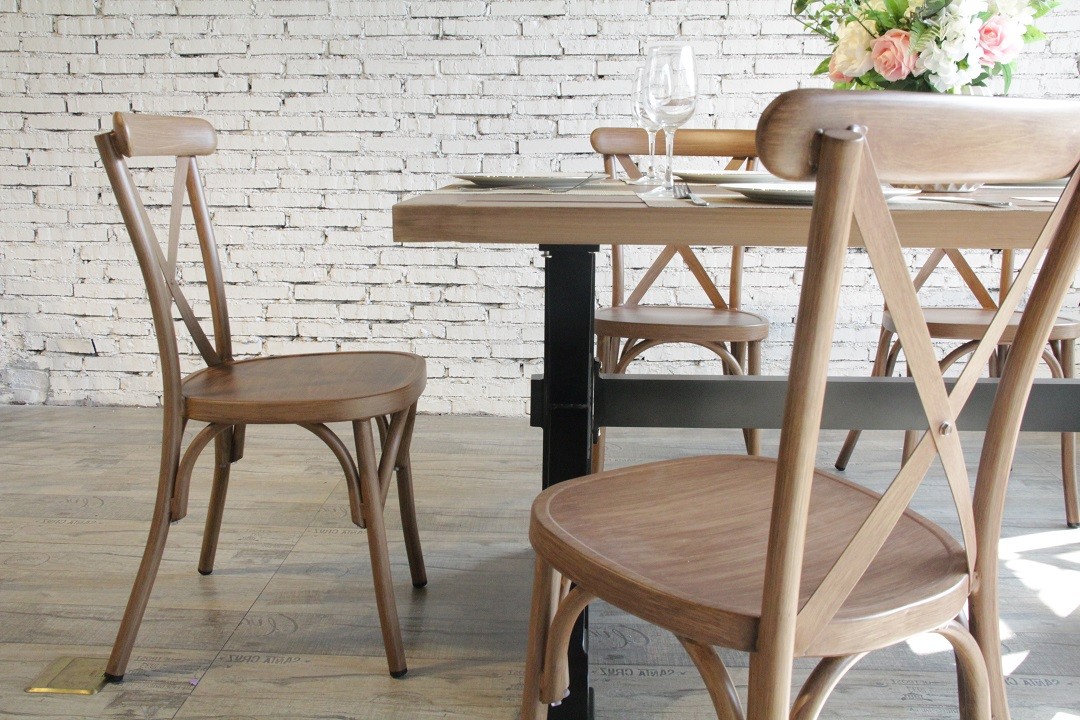
Lightweight Handling, Heavyweight Savings
Your staff will notice the difference immediately. A metal wood grain side chair typically weighs 4.5 to 7 kilograms – roughly 30 to 50 percent lighter than a commercial-grade solid wood chair. For servers resetting tables during peak service, moving chairs for overflow seating, or deep-cleaning after close, this weight reduction is transformative. It reduces physical strain, shortens training time, and minimises wear from daily handling.
Stacking ability multiplies the benefits. Metal wood grain chairs stack securely five to ten units high, cutting freight and storage costs by as much as 70 percent compared to equivalent wood chairs. For restaurants with limited back-of-house space, this is a major operational advantage. For banquet halls and event venues that reconfigure layouts often, stackable chairs enable rapid room turnover without extra labour.
The EUDR Factor: Compliance Without Complexity
For European importers and hospitality groups, the 2026 implementation of the European Union Deforestation Regulation (EUDR) has fundamentally changed furniture procurement. The EUDR requires full supply-chain transparency – importers must prove that their timber products are completely deforestation-free, including exact geolocation data. Failure to comply can trigger fines of up to 4 percent of annual turnover.
For operators used to specifying solid wood chairs, this creates a compliance burden that extends far beyond the initial purchase. Timber sourcing documents, harvest dates, land verification, and ongoing reporting add complexity to every procurement cycle.
Metal wood grain chairs offer a straightforward alternative: zero deforestation, 100 percent recyclable metal frames, and no traceability mandates to satisfy. By separating premium aesthetics from forest dependency, this technology gives European buyers a frictionless path into the EUDR era.
The environmental case is equally strong. Manufacturing 100 high-end solid wood dining chairs typically requires felling roughly six century-old beech trees – equivalent to eliminating one hectare of forest’s annual growth. A comparable batch of metal wood grain chairs consumes no trees. The metal frames are also fully recyclable at end of life, returning to industrial use rather than occupying landfill.
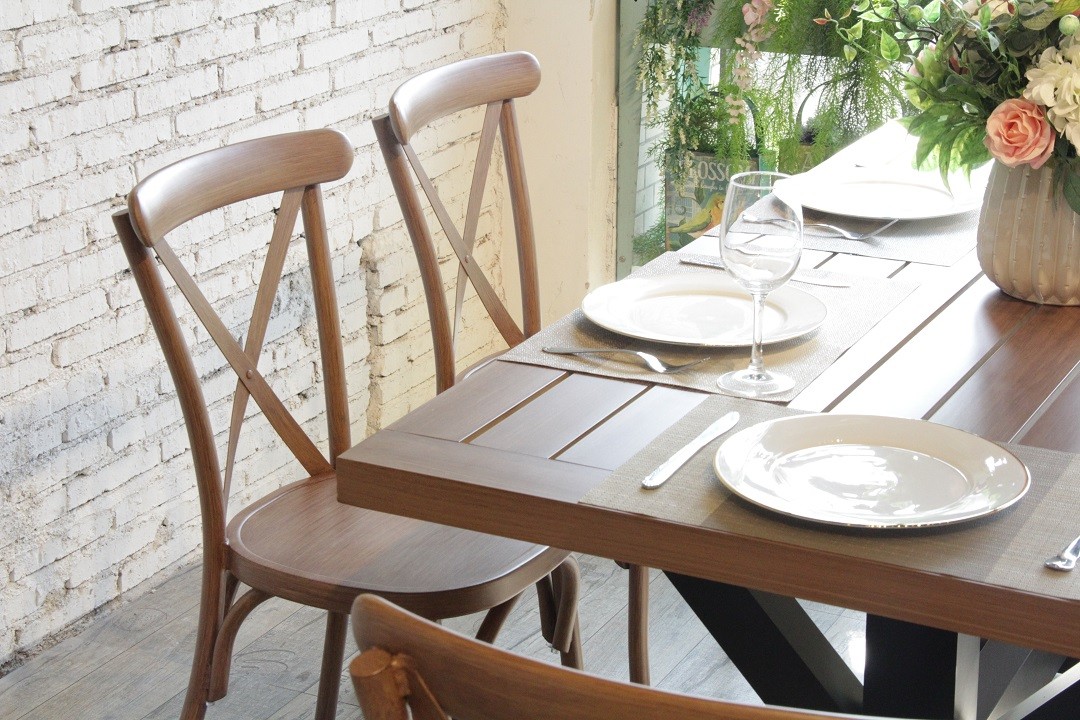
Priced for Project Economics
Perhaps the most surprising benefit is cost. High-quality metal wood grain models are often priced at roughly 50 to 60 percent of an equivalent solid wood chair. This lower upfront investment, combined with longer replacement cycles and reduced maintenance, accelerates payback periods and improves project-level financial returns.
A New Industry Benchmark
The hospitality contract furniture market is expected to grow from USD 73.7 billion in 2026 to USD 123.2 billion by 2035, at a compound annual rate of 5.9 percent. Within this expanding market, sustainable, durable, and design-forward solutions are gaining the most attention. Metal wood grain chairs are no longer a niche product or an experimental alternative. They are becoming the practical choice for restaurant owners who refuse to compromise between visual warmth and structural performance.
As one industry expert recently noted, the commercial furniture industry is at a crossroads where tradition meets a legal wall. Solid wood is becoming a high-risk liability due to the complexity of timber sourcing, while metal wood grain chairs offer a practical exit – providing the warmth of wood with the legal and operational safety of high-grade metal.
For restaurant owners and hospitality buyers looking toward 2026 and beyond, the question is no longer whether to consider metal wood grain chairs. It is how quickly they can make the switch without losing the design integrity that defines their brand. The technology has arrived. The market is ready. And these chairs are already winning.